Best Perfumes for Men in India (2026): Sorted by Occasion, Not Hype
Transparency: we formulate DOPE ONE Quite Boss. Every fragrance here, including ours, is judged on the same criteria: Indian heat performance, fabric longevity, and fidelity to the original's character. Where ours falls short, we say so.
"Best perfume for men in India" has no single honest answer, and any list that gives you one is selling something. The real answer depends on where you are going, what you can spend, and one factor most guides quietly skip: whether the fragrance was built for a climate that actually resembles yours. So this guide sorts the field the way a knowledgeable friend would: by tier and by occasion, with the honest trade-offs left in.
How to actually choose (the 60-second version)
Three things decide whether a fragrance works for you in India, and none of them is the brand on the box.
Concentration. An Eau de Parfum (EDP) holds more aromatic material than an Eau de Toilette (EDT), which is why it lasts longer and projects further, and why it matters more in heat, where light top notes burn off fast. When two versions of a fragrance exist, the EDP is almost always the one worth buying in India.
Base structure.Amber, woody, oud, and tobacco bases are heat-stable and carry a scent's trail long after the opening fades. Bright citrus and aquatic top notes are the first casualties of a 40°C afternoon. This is why the richest-smelling fragrances feel like they last longer in summer; their base is doing the work.
Occasion.An office in July and a December wedding ask for opposite things. The single most common mistake is buying one "signature" bottle and wearing it everywhere. Two well-chosen fragrances (one fresh, one warm) cover almost every situation an Indian man dresses for. For the workday specifically, our best perfume for office in India roundup covers the low-projection picks that last a desk day.
The four families worth knowing before you buy
Every fragrance recommendation on the internet assumes you already know what "woody" or "gourmand" means. Most guides skip this, and it is the single fastest way to stop buying fragrances you end up not wearing.
Fresh and aquatic:citrus, marine, and green notes (Cool Water, Acqua di Gio, most of the "summer" category). Light, clean, office-safe, but the first family to fade in heat because its top notes are the most volatile. Woody and oriental: oud, amber, sandalwood, leather (Ombre Nomade, Aventus's smoky-fruit base, most winter and evening fragrances). Heat-stable, long-lasting, but can read heavy in peak summer if overapplied. Gourmand and spice: vanilla, tonka, cinnamon, cardamom (Lattafa Khamrah, Azzaro The Most Wanted). Warm, memorable, and genuinely excellent for winter and evenings; the family most likely to turn cloying in humidity if you spray too much. Citrus-aromatic:bergamot, lavender, herbs (most classic colognes, Bleu de Chanel's top notes). Crisp and professional, sits between fresh and woody in both character and longevity.
Most men own one family and wonder why half their bottles feel wrong half the year. A fresh-and-aquatic signature for summer paired with one woody or gourmand pick for winter and evenings solves this without needing a five-bottle collection. To go deeper in one family, our roundups of the best gourmand perfumes in India and the best oriental perfumes in India cover each family in detail.
The designer icons
These are the fragrances most people picture when they think "good perfume." They are genuinely excellent, genuinely versatile, and genuinely expensive in India thanks to import duty. You are paying for polish and a name, both real, both optional.
The value powerhouses (where India actually shops)
Here is the honest truth the designer counters will not tell you: the Arabian and Indian EDP houses have closed the gap, and in one respect they have an edge. Brands like Armaf, Lattafa, and Afnan formulate for Gulf heat, a climate close enough to India's that their compositions often hold their shape here better than European designers composed for a Paris spring. You give up a little refinement. You get a lot of scent, and a lot of longevity, for the money.
The homegrown niche lane
There is a fourth road between designer polish and Arabian value: small Indian houses formulating for Indian conditions specifically. We build in this lane, so treat the next entry as informed rather than neutral; it is one credible option among the many above, not a claim to beat them.
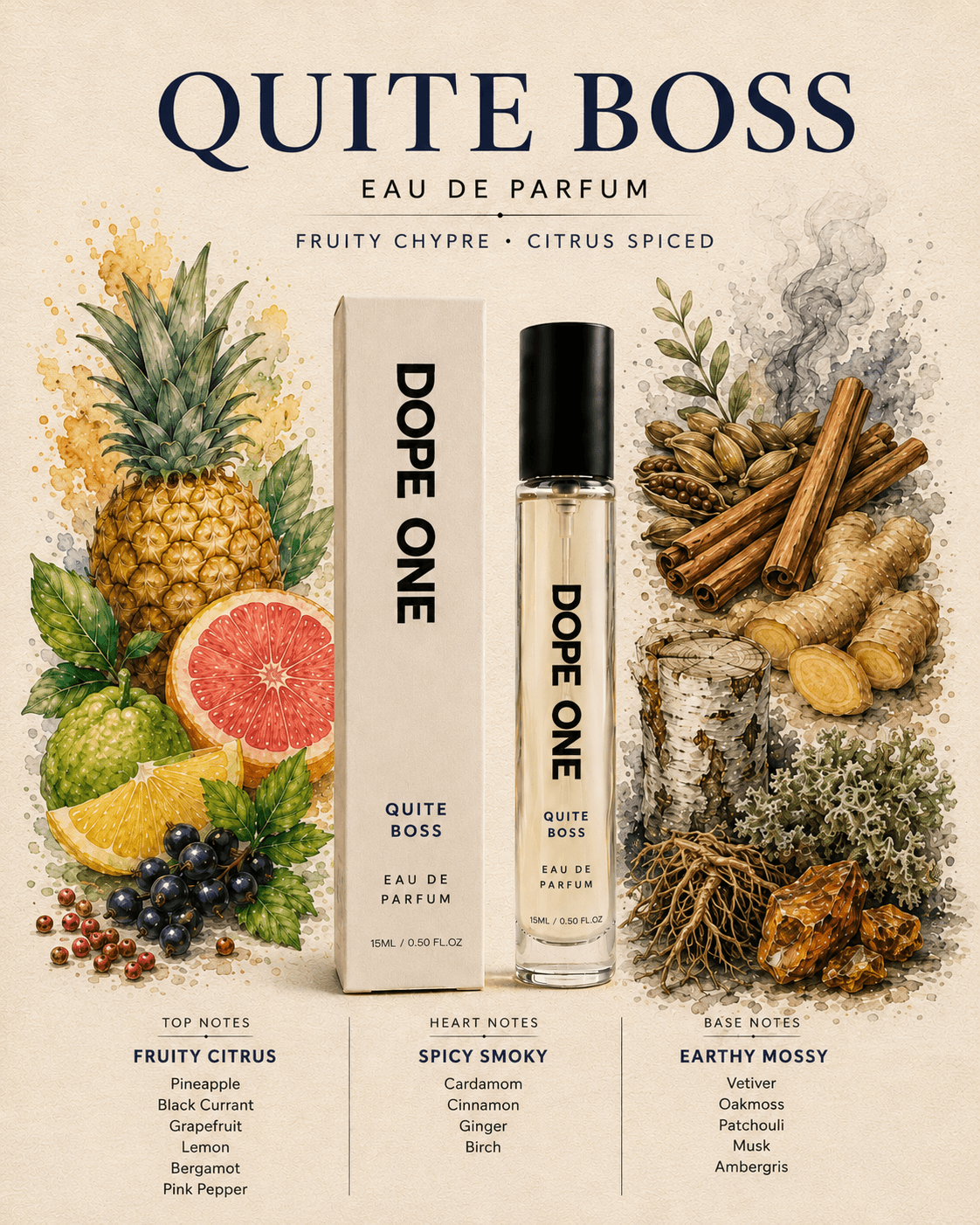
Quite Boss
Pineapple, birch smoke, woody amber
₹419
View →
'What are you wearing?' — asked by people who couldn't name a single fragrance house. That's the whole point of this DNA. Hours two through five are the sweet spot: the opening's energy still present, the loudness gone, everything composed.
| Fragrance | Profile | Longevity | Price | Best for |
|---|---|---|---|---|
| Dior Sauvage (EDP) | Bergamot, pepper, ambroxan: clean and crowd-pleasing | Widely reported as strong | ₹9,000–13,000 range (2026) | The safe designer default; versatile, universally liked |
| Bleu de Chanel (EDP) | Citrus, incense, cedar: refined and office-appropriate | Widely reported as strong | ₹11,000–16,000 range (2026) | The polished formal pick; quietly expensive-smelling |
| Versace Eros (EDT/EDP) | Mint, green apple, vanilla, tonka: sweet-fresh evening signature | Widely reported as strong, heat-stable base | ₹6,500–9,500 range (2026) | The most-complimented evening designer pick |
| Armaf Club de Nuit Intense Man | Smoky pineapple, birch, patchouli: the Aventus territory | Community rates it a strong all-day performer | ₹1,500–2,800 range (2026) | The value icon; huge scent for the money |
| Lattafa Khamrah | Cinnamon, dates, vanilla, tonka: warm gourmand-spice | Community rates it a strong all-day performer | ₹2,500–3,500 range (2026) | The viral winter-spice powerhouse |
| Afnan 9PM | Apple, lavender, vanilla, tonka: sweet and easy | Community rates strong | ₹1,800–2,600 range (2026) | The budget date-night staple |
| DOPE ONE Quite Boss | Pineapple, birch smoke, woody amber | 5–6+ hours on fabric | ₹419 | The homegrown niche pick, formulated for Indian heat |
The picks by occasion
Everyday office (hot months): Dior Sauvage or Rasasi Hawas: clean, moderate projection, heat-tolerant. Formal and professional: Bleu de Chanel: restrained enough for a boardroom, refined enough for client meetings. Date night: Afnan 9PM on a budget, Versace Eros or Lattafa Khamrah when the weather cools and projection matters more. Wedding season and winter events: Khamrah or a smoky oud; richer bases carry cold air and fill a banquet hall the way a fresh fragrance cannot. Festivals and family functions: something warm but not overpowering: Bleu de Chanel or a lighter gourmand works better than a full oud in a crowded, indoor, all-day setting. Gym and casual daytime:skip fragrance entirely or use a deodorant-strength option; a full EDP mixed with sweat is the single most common source of "he's wearing too much" complaints. Monsoon specifically: lighter application of anything you own; sustained humidity amplifies base notes on all fragrances, so what reads as normal in dry heat can read as heavy in July and August. Value all-rounder: Armaf Club de Nuit. For the deeper cut on what genuinely survives a full Indian day, the long-lasting perfumes guide goes further, and the summer fragrances guide covers the hot-weather field specifically.
Four mistakes that waste money on fragrance
Buying off an advert alone. A fragrance ad sells a mood, not a scent profile; the only reliable test is smelling it on your own skin for a few hours, since skin chemistry changes how a composition develops. Assuming price equals longevity. Concentration and base structure decide longevity, not the number on the price tag; a ₹2,000 EDP frequently outlasts a ₹10,000 EDT. Ignoring storage. Fragrance degrades faster in direct sunlight and bathroom humidity than most buyers realise; a bottle kept in a cool, dark drawer holds its character for years longer than one left on a sunlit windowsill. One signature for every season. The single costliest mistake on this list: a rich winter fragrance in May, or a light summer aquatic in December, is rarely the fragrance failing. It is usually the wrong bottle for the month.
How to actually apply it (most men get this wrong)
The single biggest reason a good fragrance underperforms has nothing to do with the bottle. Pulse points over clothing. Wrists, neck, and behind the ears work in cool climates, but in Indian heat that skin sweats and metabolises fragrance faster, which is exactly why the same bottle seems to vanish by lunch. A spray on the chest of your shirt and the inside of a jacket lapel holds for hours longer, because fabric does not sweat.
Spray count. Two to three sprays is the honest range for an EDP; more does not mean it lasts longer, it means it turns heavy and everyone around you knows it before you do. Distance and moisture. Hold the bottle four to six inches from skin, and apply right after a shower while skin still holds some moisture; fragrance clings to hydrated skin noticeably better than to dry skin. Do not rub it in. Rubbing wrists together after spraying breaks down the top notes through friction and heat, which is the opposite of what you paid for.
Layering, if you want to try it: a matching unscented or lightly-scented body lotion applied first gives fragrance molecules something to hold onto through the day. This matters more in Indian humidity than in any climate the fragrance was likely tested in.
Building a two-bottle wardrobe without overspending
You do not need ten bottles. Two, chosen deliberately, cover a working adult's entire year in India. One fresh-and-aquatic or citrus-aromatic pick for the eight or nine hot months: Dior Sauvage or Rasasi Hawas both work. One woody or gourmand-spice pick for winter, weddings, and evenings: Lattafa Khamrah or Bleu de Chanel, depending on budget. That is the entire brief. A third bottle, if you want one, is the fragrance you wear specifically for one context (gym, festival, or a signature scent for dates) and it is the one place spending more on refinement genuinely shows.
Arabian vs designer: the real trade-off
If budget is no object and you want refinement and a name, the designers win on polish. If you want the most scent, the most longevity, and the best heat performance per rupee, the Arabian houses win, and it is not especially close. Most well-dressed men in India in 2026 own both: a designer bottle for when the name matters, and two or three Arabian or homegrown EDPs for daily life. That is not a compromise; it is just how a smart fragrance wardrobe works here.
Common questions
- Which perfume is best for men in India?
- There is no single winner; it depends on occasion and budget. Dior Sauvage is the safest designer default; Armaf Club de Nuit and Lattafa Khamrah lead the value tier; and Arabian EDP houses generally outlast European designers in Indian heat. Match the fragrance to the moment rather than chasing one signature.
- Which is the No 1 perfume for men?
- By popularity in India, Dior Sauvage is the most-worn designer men's fragrance, and Armaf Club de Nuit Intense Man is the most-cited value pick. Neither is objectively 'number one': the best fragrance is the one that suits your occasions, budget, and climate, which is why most guides that crown a single winner are overselling.
- Are Arabic perfumes better than designer perfumes?
- For value and heat performance, often yes. Arabian houses like Armaf, Lattafa, and Afnan formulate for Gulf climates similar to India's, so they tend to last longer here for a fraction of the price. Designers win on refinement and brand prestige. Many wearers own both and use each for different occasions.
- Which perfume lasts the longest in India?
- Longevity comes from concentration and base structure, not brand. EDP-tier fragrances with amber, woody, oud, or tobacco bases last longest in the heat; light EDT aquatics fade fastest. Arabian EDP houses are known for strong longevity. On fabric, almost any well-made EDP holds far longer than on warm skin.
- What perfume should I wear to the office in India?
- Something clean and moderate that will not overwhelm a shared, air-conditioned space. Dior Sauvage, Bleu de Chanel, or a fresh Arabian aquatic like Rasasi Hawas all work. Save the heavy oud, gourmand, and big-projection fragrances for evenings and cooler-weather occasions.
- How many sprays of perfume should a man use?
- Two to three sprays of an EDP is the honest range for most fragrances, applied to fabric (shirt, jacket lapel) rather than only skin, since fabric holds a scent far longer in Indian heat. More sprays does not extend wear time meaningfully; it mostly raises the risk of overwhelming a room.
- Is it better to buy one expensive perfume or several cheaper ones?
- For most buyers, two well-chosen fragrances (one fresh for summer, one warm for winter and evenings) cover the year better than one expensive signature scent. A single designer bottle is not wrong, but it usually means wearing the wrong profile for at least half the calendar.
- Do Arabian perfumes actually last longer than designer perfumes in India?
- Often yes, on fabric specifically. Arabian houses formulate at EDP concentration for Gulf climates that resemble India's, so their base structures tend to be heat-stable. Designer EDTs built for European weather frequently underperform in comparison, though designer EDPs close much of that gap.
Related guides
- Long-Lasting Perfumes for Men in India: Tested Across Indian Subtropical Conditions
- Creed Aventus Alternatives in India: The Smoky-Pineapple Profile, Tested in Indian Heat
- Azzaro Most Wanted Alternatives India: Date-Night Fragrances That Last the Evening
- Best Summer Perfumes for Men in India (2026): What Survives the Heat
- Best Gourmand Perfumes in India: The Edible-Sweet Genre, Tested in Indian Heat
- Best Oriental and Amber Perfumes in India: Warm Resins, Spice and Leather
- Best Perfume for Office Wear in India: Restraint That Lasts the Workday