Club de Nuit Intense Man vs Creed Aventus: The Honest Verdict (2026)
Transparency: we formulate DOPE ONE Quite Boss. Every fragrance here, including ours, is judged on the same criteria: Indian heat performance, fabric longevity, and fidelity to the original's character. Where ours falls short, we say so.
Two bottles sit on the same shelf in a Mumbai perfume shop. One costs more than a month's rent. The other costs less than the taxi ride home. And a decade of fragrance buyers, in India and everywhere else, have stood in front of them asking the same question: is the expensive one actually thirteen times better, or am I paying for a name?
This is the most-argued rivalry in modern men's fragrance, and most of the arguing misses the point. So here is the honest version — what each one is, where the clone genuinely catches the original, where it does not, and the thing neither camp likes to admit, which is that both were built for a climate you probably do not live in.
How a ₹2,000 bottle became famous
Creed Aventus arrived in 2010 and rewrote the rules. Smoke over fruit, confidence over sweetness — it became the most-imitated masculine fragrance of the century, the scent every boardroom and every wedding eventually smelled like. The imitations came fast. Most were forgettable. One was not.
Armaf's Club de Nuit Intense Man, out of Sterling Parfums, did something the others could not: it got close enough that people stopped treating it as a substitute and started treating it as a fragrance in its own right. On Indian forums it became the default answer to a question nobody even had to finish asking. "Something like Aventus?" — Club de Nuit. Every time. It is, by now, cited more often than most originals ever manage. A clone that outgrew the thing it was cloning.
Which is exactly why the comparison deserves an honest hearing instead of a forum shrug. These are not two versions of the same bottle. They are two different philosophies about what a fragrance is worth.
Nose to nose
Spray them on opposite wrists and the first thirty minutes tell you most of the story.
The opening
Aventus opens the way a good suit fits — you notice the quality before you notice the detail. Pineapple and blackcurrant over a clean smoky undertone, the fruit reading natural rather than candied, the birch smoke felt rather than shouted. Club de Nuit opens with the same shape turned up. Louder pineapple, a sharper synthetic edge to the fruit, the smoke pushed forward. On a cool morning both are excellent. On humid skin the Club de Nuit opening can turn brash where Aventus stays composed. This is the clearest tell, and it lasts about an hour before the two drift closer together.
The heart
This is where your money is either working or not. Aventus settles into a rose-jasmine-patchouli centre with a smoky thread running through it, and the whole thing feels deliberate — arranged, not assembled. Club de Nuit hits the same notes with less finish: the patchouli sits heavier, the florals are blunter, the transitions less smooth. An experienced nose separates them here without effort. A stranger across a dinner table almost never can. That gap — real to you, invisible to everyone else — is the entire ₹26,000 question.
The base and the projection
Aventus dries down to ambroxan and clean musk that projects without ever turning heavy — it knows how to sit close when a room is small. Club de Nuit does the opposite, and on purpose. Its base runs heavier and sweeter, and it is widely reported to be the louder, longer-lasting of the two, the one people mean when they call a fragrance a beast. In a banquet hall that is a feature. In a shared cabin at 2 p.m. it can be a liability. Choose your room.
The part the price tag hides
Here is the uncomfortable truth about spending ₹28,000 on Aventus: you do not fully know what you are buying. Creed acknowledges batch-to-batch variation, and the community has catalogued it for years — some batches run smokier, some fruitier, some noticeably thinner. The bottle a colleague swears by and the bottle you carry home from the same counter a month later may not be the same experience. Add grey-market sourcing, where provenance is unverifiable and convincing counterfeits are real at this price, and the premium starts to look less like a guarantee and more like a wager. Club de Nuit, for all its bluntness, is at least consistent: the bottle you buy is the bottle everyone else is buying.
| Fragrance | Profile | Longevity | Price | Best for |
|---|---|---|---|---|
| Creed Aventus | Pineapple-blackcurrant, birch smoke, rose-patchouli heart, ambroxan base | Community rates strong; batch-dependent | ₹25,000–38,000 range (2026) | The original. The badge, the refinement, the batch gamble |
| Armaf Club de Nuit Intense Man | Louder pineapple-citrus, sharper smoke, heavier patchouli drydown | Community rates it a strong all-day performer | ₹1,500–2,800 range (2026) | The clone that outgrew the conversation. Value, reach, projection |
| DOPE ONE Quite Boss | Pineapple, birch smoke, woody amber | 5–6+ hours on fabric | ₹419 | The third road: the profile rebuilt for Indian heat |
The verdict
So far, so familiar — this is roughly where every version of this comparison ends, with a nod to the clone and a bow to the original. But both verdicts share a blind spot, and if you live in India it is the one that matters most.
The question neither bottle answers
Aventus was composed in France, for European skin and European weather. Club de Nuit was tuned for Gulf-market projection. Neither was built for a Chennai August or a Delhi May, and it shows in the same place both times: the bright pineapple opening, the part you fell for, is exactly the part heat punishes first. What reads clean at 22°C can turn sticky and shapeless by mid-afternoon at 40°C with humidity. You can love either bottle and still watch its best hour evaporate on your commute.
That gap is the reason a third road exists at all.
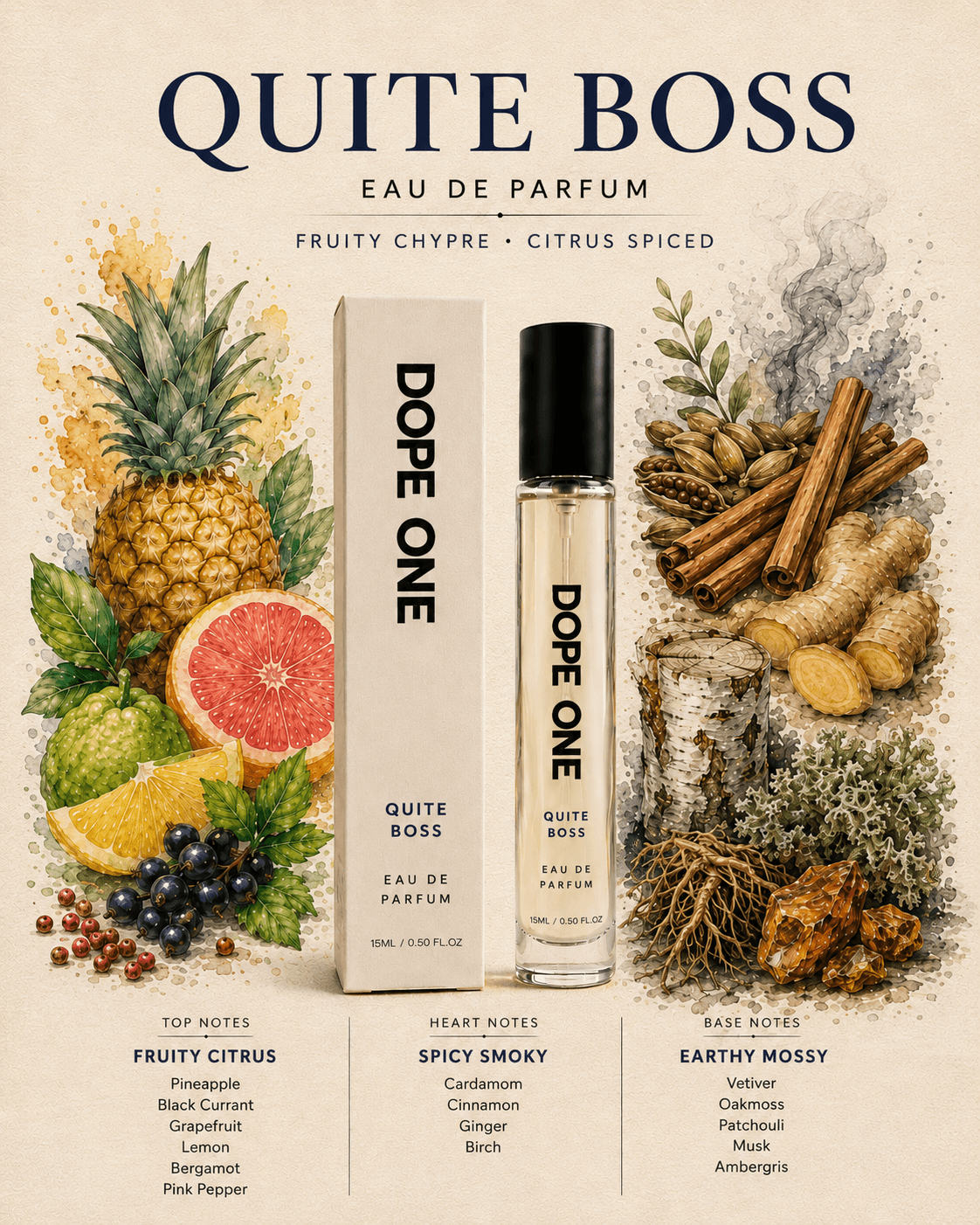
Quite Boss
Pineapple, birch smoke, woody amber
₹419
View →
Its biggest weakness is being easy to like. If you collect difficult fragrances, this will feel safe. It is. Deliberately.
How to actually decide
Strip away the forum noise and it comes down to three honest questions. Do you want the original badge and the last ten percent of polish, and can you accept the price and the batch risk to get it? Buy Aventus. Do you want the signature at a price where none of that matters, and can you live with a louder, blunter read of it? Buy Club de Nuit, and do not let anyone make you feel you settled. Or do you want that signature to still be there at 4 p.m. in an Indian summer, built for the weather instead of merely surviving it? That is the third road, and it is the one the usual two-horse framing leaves out.
Common questions
- Which is better, Club de Nuit Intense Man or Creed Aventus?
- Aventus is the more refined fragrance — smoother opening, better-composed heart, and the original badge. Club de Nuit is louder, cheaper, and by community consensus captures around 85–90% of the character. For most wearers the clone is the smarter buy; the original earns its price only if refinement and the badge genuinely matter to you.
- Is Club de Nuit Intense Man a good Aventus dupe?
- It is the one that made the category respectable. Community consensus puts it around 85–90% of the Aventus DNA at a fraction of the price, with louder projection. The trade-offs are honest: a sharper, more synthetic opening and a blunter heart. For broad smoky-pineapple wear it delivers; for the last touch of polish, the original still wins.
- How close is Club de Nuit Intense Man to Creed Aventus?
- Close on structure, not on finish. The pineapple-birch shape is present and recognisable in both, and a casual wearer often cannot separate them. The differences an experienced nose catches are in opening cleanness, heart refinement, and base balance — roughly the 85–90% the community consistently reports.
- Should I buy Club de Nuit or save for Aventus?
- If the badge and the last ten percent of refinement matter, and you accept the batch risk, save for Aventus. If not, Club de Nuit is the smarter buy and no apology is needed. One thing both skip: neither was built for Indian heat, where a climate-composed option in the same territory can hold its shape longer than either.