Cinnamon in Perfumery: Why Perfumers Barely Use It
Transparency: we formulate DOPE ONE QUITE BOSS. Every fragrance here, including ours, is judged on the same criteria: Indian heat performance, fabric longevity, and fidelity to the original's character. Where ours falls short, we say so.
Perfumers treat cinnamon like a spice that can ruin a fragrance if you use too much of it, because it can.
What Cinnamon Actually Is and the Vibe It Carries
The Chemistry
Cinnamon comes from the inner bark of trees in the Cinnamomum genus. Its aroma is dominated by cinnamaldehyde, which can make up 50 to 90 percent of cinnamon bark oil, with eugenol (the same clove-like compound found in cloves) adding nuance. Ceylon cinnamon and cassia differ in their exact chemical ratios, which is why they smell subtly different despite both being called "cinnamon."
The General Perception
Cinnamon reads as warm, spicy, and slightly sweet, instantly recognisable and comforting. If cinnamon were a moment, it would be walking past a bakery in cold weather, immediate and familiar.
Why Cinnamon Is Used So Sparingly
Sourcing
Cinnamon oil comes in two main forms: bark oil, richer in cinnamaldehyde and more potent, and leaf oil, gentler and more eugenol-forward. Perfumers choose between them depending on how much intensity a composition can handle.
IFRA Reality
Cinnamaldehyde falls under IFRA Category 4 restrictions, capped at just 0.05% in fine fragrance concentrations, one of the lowest limits of any common spice material.
How It Found Its Place in Perfumery
Cinnamon's low ceiling isn't only regulatory, it's practical. As one professional perfumer has put it, smelling distinctly "like cinnamon" in a fine fragrance is usually taken as a criticism, a sign the composition reads more like flavoured gum than luxury. Because of that, cinnamon usually works as a whisper-quiet accent rather than a headline note, the opposite of how it's used in baking or candles.
Alternatives, If Cinnamon Isn't for You
| Alternative | What You Get | What You Lose | Best When... |
|---|---|---|---|
| Vanilla | A softer, creamier sweetness without cinnamon's sharp spice bite | Cinnamon's warm, immediately recognisable spiciness | You want gourmand warmth without an overt spice note |
Our vanilla in perfumery guide covers that pairing directly.
The Indian Perspective on Cinnamon
The Cultural Anchor
India grows and uses cassia widely, a genuinely distinct variety from Ceylon cinnamon (sourced mainly from Sri Lanka and Madagascar), and cinnamon holds a deep culinary role here as a core component of garam masala and countless regional spice blends.
Traditional Use
That culinary dominance doesn't carry over into Indian perfumery the same way, cinnamon's fragrance role remains comparatively minor domestically despite its constant kitchen presence.
The Modern Indian Context
Indian fragrance use of cinnamon follows the same global IFRA-capped dosing conventions, sourced from either domestic cassia or imported Ceylon cinnamon oil depending on the composition's needs.
Who Loves Cinnamon, and Who Doesn't
Why People Love It
- Instantly warm and comforting, a genuinely familiar spice
- Adds real depth to oriental, gourmand, and woody-spicy compositions
- Pairs naturally with fruit and vanilla for cozy, wearable warmth
- A small, well-dosed amount genuinely elevates a blend
Why They Won't
- Too much reads as candy, gum, or baked goods rather than perfume
- IFRA's strict 0.05% cap means it's almost never a headline note
- Its familiarity can feel less "luxurious" to wearers seeking novelty
- Ceylon vs. cassia variation means "cinnamon" alone doesn't guarantee a consistent scent
The honest trade-off: cinnamon rewards someone who wants a quiet, well-dosed spice accent, not a note that dominates the composition.
Pairings, Clashes and Real Fragrance Picks
What Cinnamon Pairs With
Cinnamon pairs naturally with fruit notes like apple, both evoking cozy, baked warmth. It clashes with sharp, cold citrus that fights its warm sweetness.
Real Fragrance Recommendations
| Fragrance | Cinnamon's Role | Price Band (India, approx.) | Heat Performance | Best For |
|---|---|---|---|---|
| Viktor & Rolf Spicebomb | Cinnamon and pink pepper drive a bold, explosive spicy opening | ~₹8,000-12,000/90ml | Strong and long-lasting; performs well in most weather | Wearers wanting a bold, unmistakably spicy signature |
| Tom Ford Noir de Noir | Cinnamon deepens a dark rose-truffle-oud composition | ~₹20,000-28,000/100ml | Rich and heavy; best in cooler weather | Wearers wanting cinnamon in a dark, luxurious register |
| Serge Lutens Chergui | Cinnamon blends into a honeyed tobacco-amber composition | ~₹15,000-20,000/100ml | Warm and long-wearing; suits cooler climates | Wearers wanting cinnamon folded into a soft, honeyed warmth |
Where Cinnamon Shows Up in the DOPE ONE Lineup
Quite Boss genuinely carries cinnamon in its heart, alongside cardamom, ginger, and birch, adding warmth beneath its pineapple-forward top.
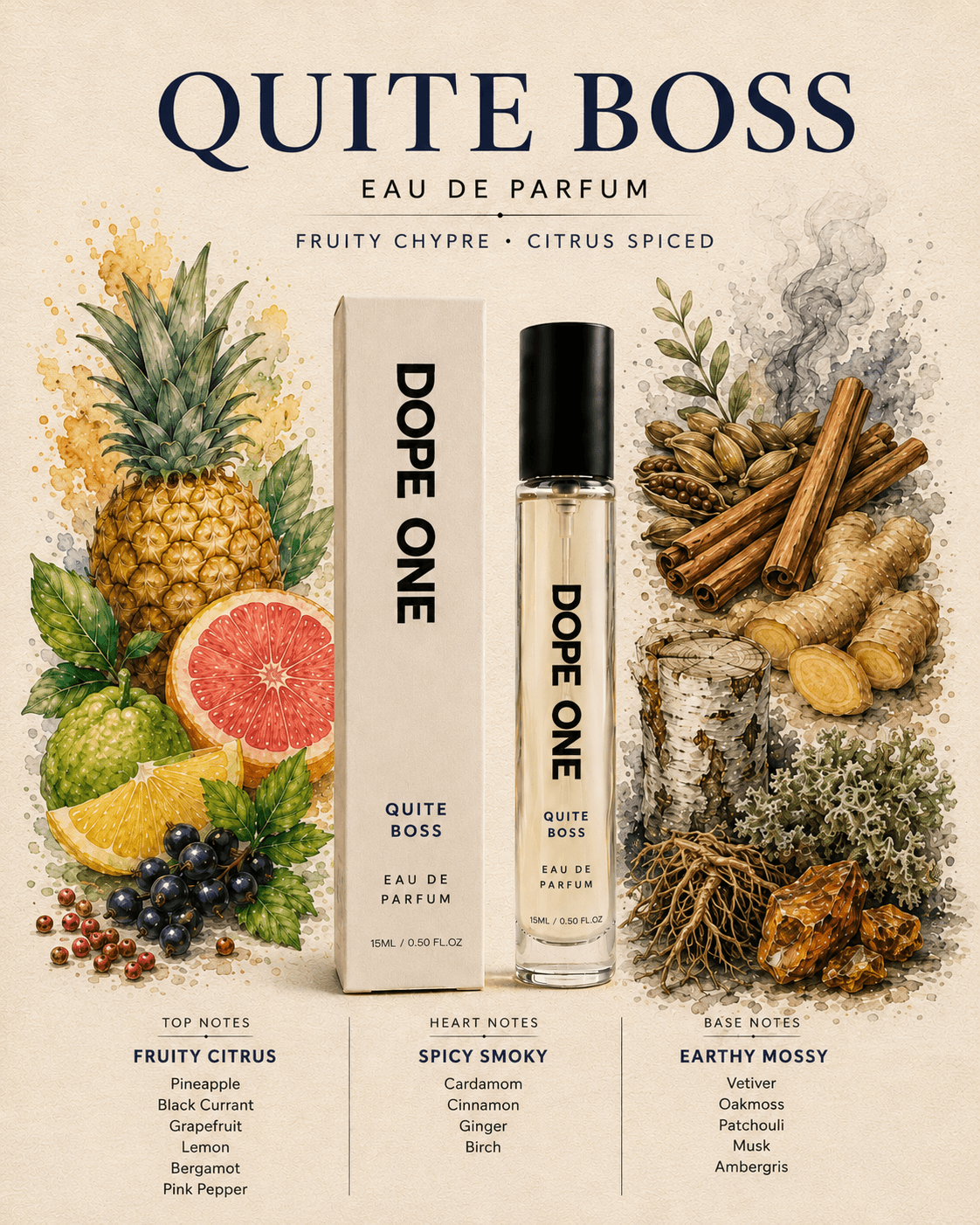
QUITE BOSS
Pineapple and pink pepper brightness over a cinnamon-birch heart, grounded by an oakmoss-vetiver base.
₹419
View →
'What are you wearing?' — asked by people who couldn't name a single fragrance house. That's the whole point of this DNA. Hours two through five are the sweet spot: the opening's energy still present, the loudness gone, everything composed.
₹419 · ₹1,319
The honest limitation: Quite Boss is a fruity-spicy composition overall, not a dedicated cinnamon fragrance. Its cinnamon sits quietly in the heart rather than leading the structure, so if you want cinnamon as the headline note, the classics above remain the sharper choice.
Cinnamon in Perfumery: Quick Answers
A few of the most common questions people ask about cinnamon as a fragrance note, answered directly below.
The Bottom Line on Cinnamon
Cinnamon in perfumery is a spice that gets used the least when it's used best, a quiet accent rather than a headline, precisely because its familiarity can turn a fragrance into flavoured gum if the dose runs too high.
Common questions
- What does cinnamon smell like in perfume?
- Warm, spicy, and slightly sweet, instantly recognisable, driven mainly by cinnamaldehyde with eugenol adding nuance.
- Why is cinnamon restricted by IFRA?
- Cinnamaldehyde falls under IFRA Category 4, capped at just 0.05% in fine fragrance, one of the lowest limits of any common spice material, due to sensitisation concerns.
- Is cinnamon bark oil different from cinnamon leaf oil?
- Yes. Bark oil is richer in cinnamaldehyde and more potent, while leaf oil is gentler and more eugenol-forward. Perfumers choose based on how much intensity a composition can handle.
- What is the difference between Ceylon and cassia cinnamon?
- Both are called cinnamon but differ in their exact chemical ratios, giving them subtly different aromas. Ceylon cinnamon comes mainly from Sri Lanka and Madagascar, while cassia is widely grown in regions including India.
- Does DOPE ONE have a cinnamon fragrance?
- Quite Boss genuinely carries cinnamon in its heart, alongside cardamom, ginger, and birch, though it's a fruity-spicy composition overall rather than a dedicated cinnamon fragrance.
- What pairs well with cinnamon in perfumery?
- Cinnamon pairs naturally with fruit notes like apple and with vanilla, both evoking cozy, baked warmth. It clashes with sharp, cold citrus.