Magnolia in Perfumery: An Ancient Flower That Smells Almost Futuristic
Transparency: we formulate DOPE ONE EMERALD MOSS. Every fragrance here, including ours, is judged on the same criteria: Indian heat performance, fabric longevity, and fidelity to the original's character. Where ours falls short, we say so.
Magnolia belongs to one of the oldest flowering plant lineages on Earth, predating bees, yet in perfumery it reads as something almost futuristic: bright, lemony, and "solar" rather than heavy or ancient.
What Magnolia Actually Is and the Vibe It Carries
The Chemistry
Magnolia, from the ancient flowering plant genus of the same name, is native to Southeast Asia and China, where it's still harvested by hand in small, artisanal batches. Because steam distillation degrades the flower's delicate top notes, magnolia is typically captured through solvent extraction, producing a concrete and absolute, or through CO2 extraction, which preserves more of its fresh, volatile character.
The result is creamy, citrusy, lemony, and distinctly "solar," a brightness that reads more like sunlight through leaves than a traditional heavy white floral.
The General Perception
Magnolia reads as fresh, clean, and quietly modern, a floral that carries real botanical age without smelling old-fashioned. If magnolia were a moment, it would be sunlight breaking through leaves onto skin still cool from shade.
Where Magnolia Comes From and How It Earned Its Place
Sourcing
China remains the primary source, with artisanal, small-batch harvest practices that reflect the flower's delicate, fast-fading nature. Its native range across Southeast Asia and China long predates its modern use in fine fragrance.
IFRA Reality
No unusual restriction specific to magnolia extract as a whole, though standard labeling requirements apply to citral and linalool content, both common to lemony-floral materials and potential sensitisers requiring disclosure above certain concentrations.
How It Found Its Place in Perfumery
Magnolia became valued as a heart note for freshness and floral nuance, appearing in modern compositions that want a bright, solar quality without the weight of denser white florals. In some cultural traditions tied to the flower, it symbolises gratitude and purity.
Alternatives, If Magnolia Isn't for You
| Alternative | What You Get | What You Lose | Best When... |
|---|---|---|---|
| Jasmine | A headier, more indolic, longer-lasting floral depth | Magnolia's light, lemony, "solar" freshness | You want floral intensity rather than brightness |
| Other citrus-forward florals | A similarly bright, fresh, sunlit quality | Magnolia's specific creamy, powdery undertone | You like magnolia's brightness more than its floral body |
The Indian Perspective on Magnolia
The Cultural Anchor
Magnolia species do exist ornamentally in parts of India, particularly in Himalayan and Northeastern regions where related magnolia species grow naturally, but no commercial perfumery extraction industry has developed around them.
Traditional Use
Unlike China's artisanal harvest tradition built specifically for fragrance extraction, India's magnolia relatives remain ornamental and botanical rather than an industry material, a genuine but limited presence worth stating honestly rather than overstating.
The Modern Indian Context
Indian niche perfumery uses magnolia the same way most of the world does, as an imported extract valued for its bright, solar character, without a domestic sourcing story to draw on.
Who Loves Magnolia, and Who Doesn't
Why People Love It
- The bright, citrusy, "solar" quality reads fresh and modern rather than heavy
- Genuine botanical history, among the oldest flowering plant lineages on Earth
- Versatile as a heart note, lifting compositions without overwhelming them
- Performs well as an everyday, warm-weather floral
Why They Won't
- Can feel thin or one-dimensional compared to denser white florals like jasmine or tuberose
- The citrusy top-note brightness fades relatively quickly on skin
- Less recognizable to casual wearers than more famous white florals
- Limited artisanal sourcing (mainly China) means less variety in raw material quality
The honest trade-off: magnolia rewards someone who wants a bright, fresh, modern floral moment, but it won't deliver the depth or longevity of perfumery's heavier white florals.
Pairings, Clashes and Real Fragrance Picks
What Magnolia Pairs With
Magnolia pairs naturally with jasmine, which adds depth beneath its brightness, and with citrus notes generally, which extend its solar character. It clashes with heavy, dark resins and woods, which tend to smother its deliberately light top-note quality.
Our jasmine guide covers the heavier white floral magnolia is most often paired against, and what eight thousand blossoms per gram actually buys.
Real Fragrance Recommendations
| Fragrance | Magnolia's Role | Price Band (India, approx.) | Heat Performance | Best For |
|---|---|---|---|---|
| Jo Malone Magnolia & Cedarwood | A bright magnolia heart set against a warm cedarwood base | ~₹8,000-11,000/100ml | Light and fresh; wears well through Indian heat | Anyone wanting a clean, modern magnolia-forward scent |
| Marc Jacobs Blush | Magnolia as a bright, solar top note in a fresh floral build | ~₹6,000-8,500/100ml | Bright and easy in warm weather | An accessible, everyday entry point into the note |
| Prada Infusion de Fleur d'Oranger | A magnolia-adjacent solar floral character alongside orange blossom | ~₹9,000-12,000/100ml | Light and citrusy; performs well in heat | Fans of bright, sunlit floral compositions |
| DOPE ONE Emerald Moss | No magnolia in the formula, but lemon in the top notes genuinely overlaps with magnolia's real citrus-solar character | ₹419 (15ml) / ₹1,319 (50ml) | Fresh and green; wears well in warm weather | Anyone curious about magnolia's citrus register in a greener, mossier composition |
Where DOPE ONE Sits Closest to Magnolia
No current DOPE ONE SKU contains magnolia. The closest available register is Emerald Moss, whose top notes genuinely include lemon, matching magnolia's real citrus-solar character, and whose heart carries violet leaf and geranium in a related green-floral register, even though magnolia itself isn't in the formula and Emerald Moss's woody base runs heavier than magnolia's light brightness.
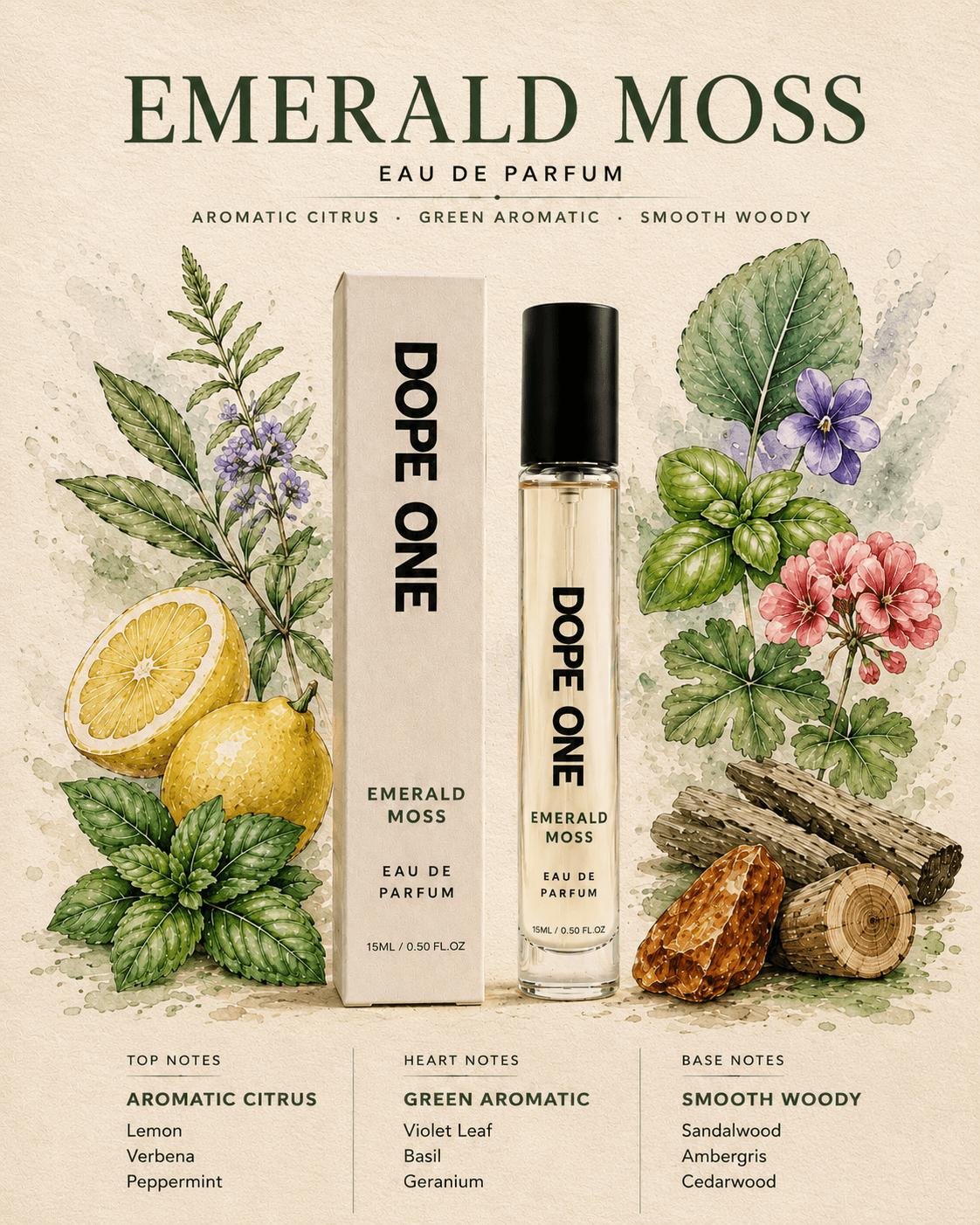
EMERALD MOSS
Lemon, verbena, and peppermint over violet leaf, basil, and geranium, resting on sandalwood, ambergris, and cedarwood.
₹419
View →
A breeze catches your shirt outdoors and you suddenly understand why this style has survived for decades. It never announces you. People are simply more comfortable around you, and conversations run smoother, and nobody can say why.
The honest limitation: it leans green and mossy where magnolia leans creamy and solar, so anyone expecting a literal magnolia experience will notice the difference the moment the base notes settle in.
Magnolia in Perfumery: Quick Answers
A few of the most common questions people ask about magnolia as a fragrance note, answered directly below.
The Bottom Line on Magnolia
Magnolia is sunlight breaking through leaves onto skin still cool from shade, a genuinely ancient flower that somehow reads modern in a bottle. Knowing its real citrus-solar chemistry, and the artisanal Chinese harvest behind it, explains why this note keeps finding its way into fresh, bright compositions rather than heavy, traditional white florals.
Common questions
- What does magnolia smell like in perfume?
- Magnolia smells creamy, citrusy, lemony, and distinctly 'solar,' a bright freshness that reads more like sunlight through leaves than a traditional heavy white floral.
- Is magnolia the same as citrus?
- No, but they share real chemical overlap. Magnolia's top notes carry genuine citral and lemon-like brightness, which is why it's often described as citrusy, even though it's botanically a floral extract, not a citrus fruit.
- Where does magnolia perfume come from?
- Magnolia is native to Southeast Asia and China, where it's still harvested artisanally in small batches. Because steam distillation degrades its delicate top notes, it's typically extracted via solvent or CO2 methods instead.
- What perfumes use magnolia?
- Jo Malone Magnolia & Cedarwood pairs it with a warm woody base, Marc Jacobs Blush uses it as a bright top note, and Prada Infusion de Fleur d'Oranger builds a related solar-floral character alongside orange blossom.
- Does magnolia grow in India?
- Related magnolia species grow ornamentally in parts of India, particularly Himalayan and Northeastern regions, but no commercial perfumery extraction industry has developed around them the way it has in China.
- What pairs well with magnolia?
- Magnolia pairs naturally with jasmine, which adds floral depth beneath its brightness, and with other citrus notes, which extend its solar character. It clashes with heavy, dark resins and woods.