Jasmine in Perfumery: 8,000 Blossoms for One Gram of Absolute
Transparency: we formulate DOPE ONE Oud Odyssey. Every fragrance here, including ours, is judged on the same criteria: Indian heat performance, fabric longevity, and fidelity to the original's character. Where ours falls short, we say so.
Jasmine is the most laborious raw material in perfumery. One gram of jasmine absolute requires roughly 8,000 hand-picked blossoms. The flowers must be picked between midnight and dawn, when the oil content is at its peak, and extracted within twenty-four hours of harvesting. The yield is roughly 0.2-0.4% of flower weight. Jasmine grandiflorum absolute costs ₹8,000-12,000 per 10ml, making it one of the most expensive naturals in the palette after orris and real sandalwood.
India grows extraordinary jasmine. Madurai in Tamil Nadu is famous for its jasmine sambac, a GI-tagged product that fills the city with its scent every morning. The same flowers that adorn Indian hair and temples produce an absolute that the global fragrance industry sources from Egypt, India, and Morocco. Yet almost no Indian perfume house formulates with it. The molecules that make jasmine intoxicating are benzyl acetate (CAS 140-11-4), which provides the sweet, fruity-floral character; linalool for floral freshness; indole for the animalic, slightly fecal undertone that makes jasmine feel alive rather than merely floral; and methyl jasmonate for the green, hay-like depth. The indole is the molecule that gives jasmine its power and its risk: too much indole reads as dirty, too little reads as flat.
No DOPE ONE SKU contains jasmine. The closest floral architecture is Oud Odyssey, whose rose heart uses the same indolic-floral register that jasmine occupies. If jasmine enters the line, it will likely enter through a floral-hedione composition that uses the transparency of benzyl acetate and the depth of methyl jasmonate.
What Jasmine Actually Is in Perfumery
Two species of jasmine dominate perfumery: Jasminum grandiflorum (royal jasmine, Spanish jasmine) and Jasminum sambac (Arabian jasmine, Indian jasmine). Grandiflorum is the classic fine fragrance jasmine: rich, indolic, animalic, with a deep floral character that is the definition of white floral perfumery. Sambac is sweeter, greener, and fresher, with a more transparent floral character and a prominent benzyl acetate top note.
| Species | Origin | Character | Cost/10ml | Key Molecule |
|---|---|---|---|---|
| Grandiflorum | Grasse (France), Egypt, Morocco | Rich, indolic, animalic, deep floral. The classic fine fragrance jasmine. Heat-extracted enfleurage tradition. | ₹8,000-12,000 | Benzyl acetate + indole + linalool. Indole content 2-6%. |
| Sambac (Mogra) | India (Madurai, Tamil Nadu), Southeast Asia | Greener, sweeter, fresher. Higher benzyl acetate, lower indole. The jasmine of Indian hair and temple offerings. | ₹3,000-6,000 | Benzyl acetate (50-60%) + linalool. Indole content 1-2%. |
| Jasmine Absolute (Blended) | Egypt (dominant export) | The industry standard. Egyptian jasmine (grandiflorum) dominates commercial availability. | ₹5,000-9,000 | Balanced benzyl acetate-indole-linalool profile. |
Jasmine is the person in the room everyone notices but no one watches. It is the note that makes other notes better. Rose gets the compliments. Jasmine gets the work done.
How Jasmine Conquered Perfumery
Jasmine has been cultivated in India for over 2,000 years. The Mughals brought the finest varieties to the subcontinent. Madurai's jasmine sambac is celebrated in Tamil literature dating back to the Sangam period. The flower has been woven into Indian hair, offered in temples, and used in attars for centuries.
In Western perfumery, jasmine became the defining white floral note through the 20th century. Chanel No. 5 uses jasmine grandiflorum from Grasse as its heart. The flower's indolic character made it the foundation of the most luxurious fragrances of the century. By the 2000s, jasmine had become so ubiquitous that it was in approximately 40% of all fine fragrance formulations.
If Jasmine Is Too Indolic
| Alternative | What You Get | What You Lose |
|---|---|---|
| Hedione (Methyl Dihydrojasmonate) | Transparent jasmine molecule with bright, citrus-floral radiance. The cleanest, most wearable jasmine effect. | No indolic depth. Hedione is the brightness of jasmine without its animalic power. |
| Neroli | Floral-citrus freshness. Provides floral character without the white floral weight. | No jasmine complexity. Neroli is simple floral-citrus. |
| Orange Blossom Absolute | Jasmine's sweeter, less indolic cousin. Shares the white floral register without the animalic edge. | No indole-driven depth. |
| Ylang-Ylang | Sweet, fruity, heady floral. Shares jasmine's intoxicating quality without the indolic stab. | Ylang is sweet where jasmine is complex. |
How Jasmine Behaves on Indian Skin
| Season | What Jasmine Does | Verdict |
|---|---|---|
| Summer (35-45°C) | Jasmine's indolic character amplifies in heat. The animalic undertone becomes more pronounced. Can read as heavy on some skin. | Proceed with caution. Grandiflorum can be heavy. Sambac's cleaner profile handles heat better. |
| Monsoon (80%+ RH) | Humidity rounds out indole's sharp edges. Jasmine becomes lush, green, and beautiful. The best Indian season for jasmine. | Excellent. Jasmine's best Indian season. |
| Winter (5-20°C) | Full jasmine performance. The floral depth is at its most complete. | Excellent. The classic season. |
Who Jasmine Is For
Jasmine attracts the wearer who wants to smell floral but not sweet. It is the note for someone who understands that elegance has an edge. Jasmine wearers tend to be confident, sensual, and unafraid of complexity.
| Who It Is For | Why It Works |
|---|---|
| Lovers of white florals | Jasmine is the queen of white florals. If you love tuberose, orange blossom, or gardenia, jasmine is the reference. |
| Monsoon wearers | Jasmine's best Indian season is monsoon. The humidity brings out its green, lush character. |
| Evening and special occasions | Jasmine is the most glamorous floral. It reads as refined, expensive, and intentional. |
| Who It Is Not For | Why It Fails |
|---|---|
| Wearers who dislike animalic notes | Jasmine contains indole. Indole smells like flowers at low levels and like decay at high levels. If you dislike that edge, jasmine is not for you. |
| Wearers who prefer clean fresh notes | Jasmine is not clean. It is intoxicating, sensual, and complex. If you prefer transparent freshness, jasmine will feel too heavy. |
| Indian summer wearers who avoid heavy florals | Grandiflorum can be heavy in direct heat. Choose sambac or hedione-based jasmine accords for summer. |
What Jasmine Plays Well With
Jasmine pairs best with other white florals and woody bases. Rose and jasmine is the classic floral pairing. Jasmine and sandalwood is the Indian attar tradition. Jasmine and musk is the cleanest jasmine wear. Within the white-floral family itself, neroli and orange blossom sit closest, three different flowers working the same indolic-to-citrus range.
Five Jasmine Fragrances Worth Wearing
| Fragrance | Jasmine Character | Price Band (India) | Heat | Best For |
|---|---|---|---|---|
| Chanel No. 5 | Jasmine grandiflorum from Grasse. The reference luxury jasmine. Aldehydic, floral, timeless. | ₹10,000-14,000 | Aldehydes lift the jasmine. Good in heat. | Understanding the jasmine reference. |
| Serge Lutens A La Nuit | Pure jasmine soliflore. The most realistic jasmine in fragrance. Intoxicating, indolic, unapologetic. | ₹10,000-13,000 | Can be heavy in direct heat. Evening wear. | Understanding pure jasmine. |
| Le Labo Jasmin 17 | Jasmine + pear + beeswax. A sweeter, more approachable jasmine. | ₹16,000-20,000 | Pear top note handles heat well. | Understanding accessible jasmine. |
| Jo Malone Jasmine Sambac & Marigold | Jasmine sambac + marigold. The Indian-inspired jasmine. Green, sweet, fresh. | ₹8,000-10,000 | Excellent. Sambac handles heat better than grandiflorum. | Understanding sambac jasmine. |
| DOPE ONE Oud Odyssey | Rose + oud + benzoin. Jasmine is not present but the rose heart uses the same indolic register. | ₹419 / ₹1,319 | Oud and benzoin base handles heat. Rose-jasmine register works year-round. | Understanding the closest floral architecture to jasmine in the line. |
Regulatory Considerations
Jasmine absolute has no significant IFRA restrictions. The only concern is that the indole content can cause skin sensitisation in rare cases at high concentrations, but the levels used in fine fragrance (1-3% of concentrate) are safe.
Jasmine: Not Yet in the Line
Jasmine is not a note in any DOPE ONE SKU. The closest architecture is Oud Odyssey, whose rose heart occupies the same indolic-floral register. If jasmine enters the line, it would likely enter through a floral-hedione composition using the transparency of benzyl acetate and the depth of methyl jasmonate, rather than the full indolic weight of grandiflorum absolute.
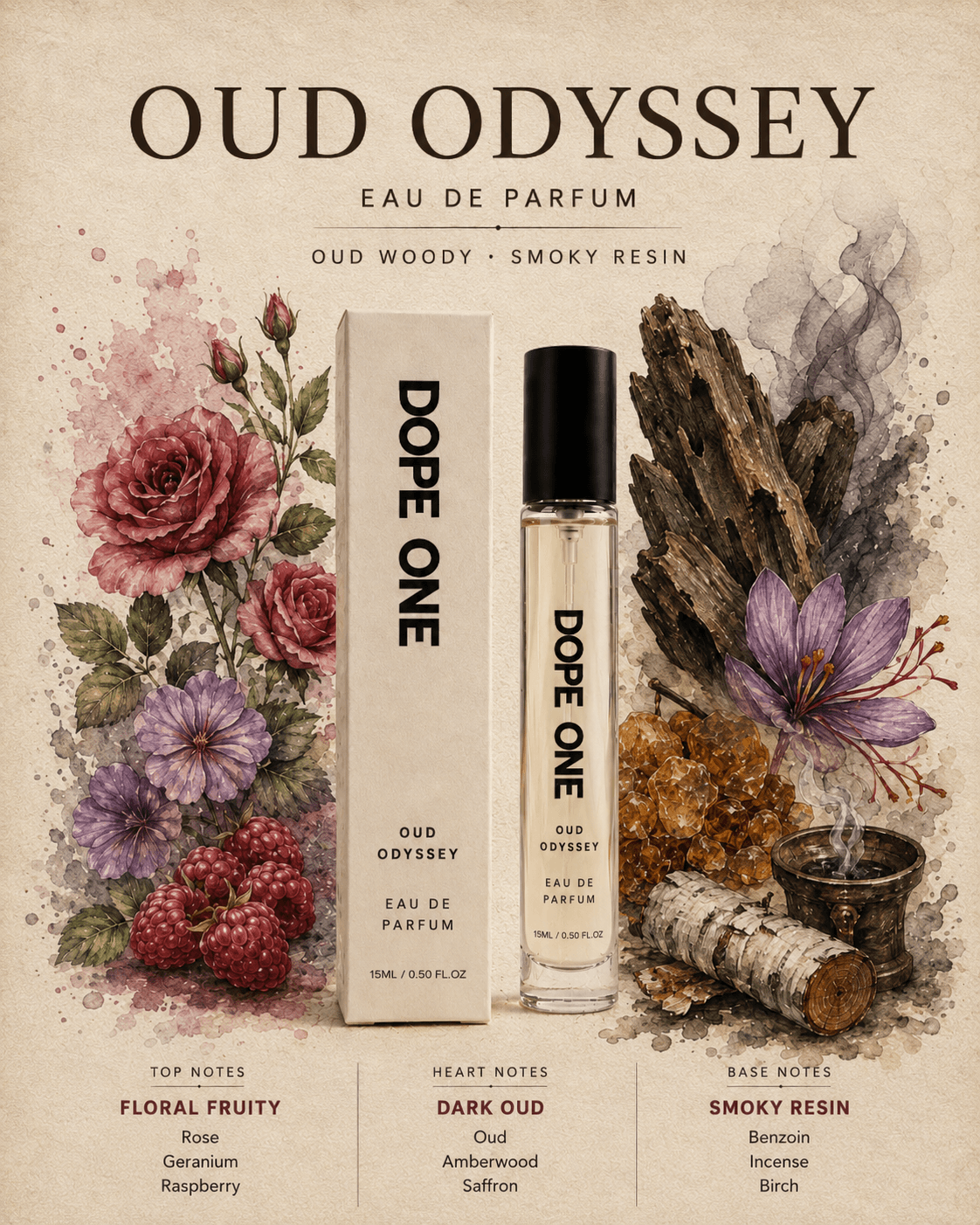
Oud Odyssey
Rose, oud, benzoin. The indolic floral register that jasmine would extend.
₹419
View →
Reactions split into exactly two camps: people who need to know what it is, and people startled that a fragrance can have this much character. Nobody ignores it. Next morning, the better question is what wasn't left on the collar.
Oud Odyssey is ₹419. Jasmine is not in it. The rose is doing the work that jasmine would do in a different composition. They occupy the same register. Sometimes the register is enough.
Common Questions About Jasmine in Perfumery
How many flowers for one gram of jasmine absolute?
Approximately 8,000 hand-picked blossoms. Picked at night, extracted within 24 hours. One of the most labour-intensive raw materials in perfumery.
What is the difference between grandiflorum and sambac?
Grandiflorum (Grasse, Egypt): rich, indolic, animalic. Sambac (Madurai, India): greener, sweeter, fresher, lower indole. Both are jasmine. Different species, different character.
Does India produce jasmine for perfumery?
Yes. Madurai's jasmine sambac is world-famous. India is a major exporter of jasmine sambac absolute. But Indian fragrance houses rarely formulate with it. The jasmine that adorns Indian hair is the same jasmine that Indian perfumers do not use.
Is jasmine perfume wearable in Indian summer?
Grandiflorum can be heavy. Sambac handles heat better. Best Indian season for jasmine is monsoon, when the humidity rounds out the indolic edge.
The Flower That Blooms at Midnight
Jasmine in perfumery is the flower that demands to be harvested in darkness. 8,000 blossoms for a gram of absolute. The indole molecule gives it an edge that makes it feel alive. India grows some of the finest jasmine in the world in Madurai. The same flowers fill Indian temples and perfume Indian hair. The molecule does not care where it comes from. It cares about the skin it lands on.
Common questions
- How many flowers for one gram of jasmine absolute?
- Approximately 8,000 hand-picked blossoms. Picked at night, extracted within 24 hours. One of the most labour-intensive raw materials in perfumery.
- What is the difference between grandiflorum and sambac?
- Grandiflorum (Grasse, Egypt): rich, indolic, animalic. Sambac (Madurai, India): greener, sweeter, fresher, lower indole. Different species, different character.
- Does India produce jasmine for perfumery?
- Yes. Madurai's jasmine sambac is world-famous. India exports jasmine sambac absolute. But Indian fragrance houses rarely formulate with it.
- What is the best jasmine perfume?
- Chanel No. 5 (reference), Serge Lutens A La Nuit (pure jasmine), Le Labo Jasmin 17 (accessible), Jo Malone Jasmine Sambac & Marigold (Indian-inspired), DOPE ONE Oud Odyssey (closest architectural neighbour).
- Is jasmine perfume wearable in Indian summer?
- Grandiflorum can be heavy. Sambac handles heat better. Monsoon is the best Indian season for jasmine.
Related guides
- Rose in Perfumery: Kannauj's 400-Year Secret and the Note That Makes Oud Worth Wearing
- Sandalwood in Perfumery: Mysore's Protected Wood and What Replaced It
- Musk in Perfumery: From Himalayan Deer Pods to the Cleanest Note in the World
- Neroli in Perfumery: Three Oils From One Tree
- Orange Blossom in Perfumery: One Flower, Three Completely Different Materials