Green Tea in Perfumery: The Same Leaf, Two Completely Different Smells
Transparency: we formulate DOPE ONE I Am A Jin. Every fragrance here, including ours, is judged on the same criteria: Indian heat performance, fabric longevity, and fidelity to the original's character. Where ours falls short, we say so.
The most important thing to understand about tea in perfumery is that it does not smell like tea. It smells like one particular stage of tea processing. The difference between green tea and black tea is not the plant. The difference is a chemical reaction called oxidation. Green tea leaves are steamed within hours of plucking to kill the enzymes that would otherwise turn them brown. The result is a fresh, grassy, slightly bitter profile that smells more like hay and fresh foliage than anything you would call "tea" in the everyday sense. Black tea leaves are allowed to oxidise fully, creating a dark, floral, honeyed, wine-like character that is the traditional tea note in perfumery.
India is the second-largest tea producer in the world, after China. Assam, Darjeeling, and the Nilgiris produce over 1.3 billion kilograms of tea annually. Not a single leaf of that is processed for perfumery-grade extract. The tea that smells like Darjeeling in a perfume bottle is a synthetic accord composed by a fragrance chemist in Geneva. The tea in I Am A Jin is black tea, not green tea. The distinction matters because they are chemically different materials with different performance characteristics on Indian skin.
What Green Tea Actually Is in Perfumery
Green tea in perfumery is a combination of molecules that recreate the fresh, grassy, slightly bitter character of unoxidised Camellia sinensis leaves. The primary aroma molecule in green tea is geraniol (CAS 106-24-1), a terpene alcohol that provides a fresh, rose-like floral sweetness. Linalool (CAS 78-70-6) adds a floral-citrus lightness. Phenylacetaldehyde (CAS 122-78-1) provides the green, grassy, hyacinth-like character. The combination is fresher and more vegetal than black tea, without the honeyed, wine-like depth that oxidation creates.
Black tea, by contrast, develops its character through oxidation. The catechins in fresh tea leaves are converted into thearubigins and theaflavins, compounds that generate a darker, richer, more floral profile. The key aroma molecule in black tea is beta-damascenone (CAS 23696-85-7), which provides the honeyed, fruity, floral character that perfumers associate with the tea note. The difference between green and black tea in perfumery is the difference between geraniol-driven freshness and damascenone-driven richness.
| Tea Type | Processing | Key Molecules | Smell Profile | Perfumery Use |
|---|---|---|---|---|
| Green Tea | Steamed / pan-fired. No oxidation. Enzymes killed within hours of plucking. | Geraniol, linalool, phenylacetaldehyde, (Z)-3-hexenol (leaf alcohol) | Fresh, grassy, slightly bitter, hay-like. The smell of fresh-picked leaves. | Top note that pairs with citrus and florals. Short-lived. Used in fresh, modern fragrances. |
| Black Tea | Withered, rolled, fully oxidised. The plant's chemistry converts to dark, floral compounds. | Beta-damascenone, linalool, geraniol, thearubigins | Floral, honeyed, wine-like, dark. The smell of the cup of tea in your hand. | Heart note. Rich floral character with warmth. Used in tea-forward fragrances like I Am A Jin. |
| Matcha | Shade-grown, stone-ground green tea. Whole leaf consumed. | L-theanine, chlorophyll, same green tea molecules plus creaminess from stone grinding. | Creamy, sweet, grassy, green. Smoother than brewed green tea. | Trending 2024-2026. Le Labo Matcha 26 accelerated the category. CO₂ extract available. |
Green tea is the note that smells like the morning. Not the cup of tea you drink, but the memory of the garden where the tea grew. If black tea is the conversation at the table, green tea is the dew on the leaf before it was picked.
How Tea Entered Perfumery
Tea entered Western perfumery through the 1990s fresh-floral category. The first notable tea fragrance was Bulgari Eau Parfumee au The Vert (1992), which paired green tea with citrus and white musk to create a category-defining fresh floral that sold in volumes that convinced the industry tea was a viable note. Bulgari's green tea fragrance established the template: green tea + citrus + musk = clean, transparent, modern.
The 2010s saw a shift toward black tea with the rise of tobacco-adjacent fragrances. By the early 2020s, the matcha trend had arrived: Le Labo Matcha 26 and Maison Margiela Replica Matcha Meditation both launched in 2021, and by 2025 matcha was one of the fastest-growing fragrance notes, driven by a combination of wellness culture, Japanese aesthetics, and the visual appeal of green powder.
I Am A Jin is a 2020s tea fragrance, but it belongs to the black tea tradition rather than the matcha trend. The fragrance uses Chinese black tea as its heart note, paired with bergamot and neroli. The result is a tea fragrance that reads as warm and spiced rather than fresh and green. The distinction between green and black tea in the fragrance is the difference between Bulgari Eau Parfumee au The Vert (green) and I Am A Jin (black). Both are tea scents. Both use the same plant. The processing makes them completely different.
If Tea Notes Are Too Subtle
| Alternative | What You Get | What You Lose |
|---|---|---|
| Mate Absolute | A smokier, greener, more bitter tea character. Yerba mate absolute is the closest natural alternative to green tea's grassy profile. | The fresh floral lift of geraniol. Mate is earthy and smoky where green tea is bright and fresh. |
| Tea Pyrrole (Synthetic) | A single molecule that captures the dry, hay-like character of tea without any floral sweetness. | No complexity. Tea pyrrole is useful as an accent, not a main character. |
| Geraniol + Linalool + Hedione | A green-floral transparency that approximates the freshness of green tea by using its primary component molecules. | No tea-specific bitterness. Geraniol-linalool-hedione is fresh and floral but does not smell like tea leaves. |
| Iso E Super + Ambroxan | The woody-amber skeleton that supports tea accords. The architecture I Am A Jin uses beneath the black tea note. | No tea character at all. This provides structure, not flavour. |
How Tea Behaves on Indian Skin
| Season | What Tea Does | Verdict |
|---|---|---|
| Summer (35-45°C) | Green tea's grassy freshness lasts 10-15 minutes before evaporating. Black tea's damascenone warmth persists longer. Thearubigin-rich black tea accords handle heat best. | Black tea: good. Green tea: short-lived but pleasant. |
| Monsoon (80%+ RH) | Tea's dry, tannic character cuts through humidity beautifully. The best Indian season for both green and black tea. | Excellent. Tea's best Indian season. |
| Winter (5-20°C) | Full tea performance. Black tea's honeyed warmth is at its best. Green tea's freshness reads as a crisp, clean top note. | Excellent. Tea's natural season. |
The Indian rule for tea: monsoon is the secret weapon. Tea's natural tannic, dry character makes it one of the few notes that benefits from high-humidity wear. If you wear a tea fragrance during the monsoon in Mumbai or Kerala, you will understand why the note works better in India than anywhere else in the world.
Who Tea Is For
Tea attracts the wearer who wants to smell refined without smelling of anything in particular. It is the note for someone who understands that restraint is a fragrance choice. Tea wearers tend to be people who wear fragrance for themselves rather than for the room they are in.
| Who It Is For | Why It Works |
|---|---|
| Wearers who dislike heavy florals | Tea provides floral character without floral weight. Black tea's damascenone sweetness reads as honeyed rather than indolic. |
| Monsoon wearers | Tea's dry, tannic profile cuts through humidity better than almost any other note. |
| Wearers who want subtle projection | Tea does not project aggressively. It rewards close contact. The fragrance for conversations, not entrances. |
| Who It Is Not For | Why It Fails |
|---|---|
| Wearers who want projection | Tea is a quiet note. It sits close to the skin. If you want to be smelled from across a room, tea is the wrong choice. |
| Wearers who dislike green notes | Green tea is fundamentally a green note. The grassy, hay-like character may read as vegetal to noses accustomed to sweeter florals. |
| Wearers who want sweet fragrances | Tea is dry and tannic, not sweet. Even black tea's honeyed character is restrained compared to vanilla or amber. |
What Tea Plays Well With
Tea is one of the most adaptive notes in perfumery because it functions as a bridge between freshness and depth. It is not sweet enough to be gourmand, not sharp enough to be citrus, not heavy enough to be woody. It sits in the middle and makes everything around it work better.
Tea and bergamot is the classic pairing. Bergamot's sharp citrus freshness lifts tea's dark character. The combination is the foundation of Earl Grey tea and the foundation of I Am A Jin's opening. Our bergamot guide covers the full citrus side of the architecture.
Tea and jasmine is the floral-tea classic. Jasmine's indolic sweetness rounds out green tea's grassy sharpness and adds depth to black tea's honeyed character. The pairing is one of the most elegant floral accords in perfumery.
Tea and ginger is the spiced tea pairing that gives I Am A Jin its warmth. Ginger's peppery zing cuts through tea's tannic dryness. The combination reads as masala chai to the Indian nose, which is exactly what the composition intends.
What Does Not Work With Tea
Tea and heavy animalic notes (castoreum, high-dose muscenone) can create a stale, musty character. Tea and strong synthetic fruit notes (berry ketones, Calone at high doses) fight for the same register and create confusion.
Five Tea Fragrances Worth Wearing
| Fragrance | Tea Character | Price Band (India) | Heat Performance | Best For |
|---|---|---|---|---|
| Bulgari Eau Parfumee au The Vert | Green tea + citrus + white musk. The reference green tea fragrance. Fresh, transparent, clean. | ₹9,000-11,000 | Excellent summer wear. Green tea top evaporates quickly but the musk base carries. | Understanding green tea as a fresh note. The historical reference. |
| Le Labo Matcha 26 | Matcha + fig + cedar. The reference modern matcha. Creamy, earthy, sweet-green. | ₹26,000-29,000 | Fig and cedar base handle heat well. Matcha's creaminess lasts through the dry-down. | Understanding the matcha trend. The reference for modern tea. |
| Nishane Wulong Cha | Tea + bergamot + fig + musk. A rich, luminous tea that bridges green and black registers. | ₹19,000-22,500 | Excellent. The most versatile tea fragrance for Indian weather. | Understanding tea at its most wearable. Year-round signature. |
| Maison Margiela Replica Matcha Meditation | Matcha + white chocolate + jasmine. Sweet, creamy, comforting. The most gourmand tea option. | ₹8,000-10,000 | White chocolate can be heavy in heat. Best for evening and winter. | Understanding tea's gourmand potential. A sweet tea option. |
| DOPE ONE I Am A Jin | Bergamot + neroli + Chinese black tea. The black tea fragrance built for Indian heat. Tea is the heart, not the top. | ₹419 / ₹1,319 | Black tea's warmth extends into the dry-down. The ISO E Super base carries the tea impression through the day. | Understanding black tea as a year-round heart note. |
Regulatory Considerations
Tea extracts and tea pyrrole have no significant IFRA restrictions. Geraniol (a primary green tea aroma molecule) is a restricted allergen under EU cosmetic regulations, but it is present at levels well below regulatory limits in fine fragrance.
I Am A Jin: Black Tea, Not Green
I Am A Jin does not use green tea. The fragrance uses Chinese black tea as its heart note, supported by bergamot and neroli. The choice of black tea over green tea was intentional. Green tea's grassy freshness would compete with the composition's warm, spiced character. Black tea's honeyed, wine-like depth supports the amberwood base and extends the wear time.
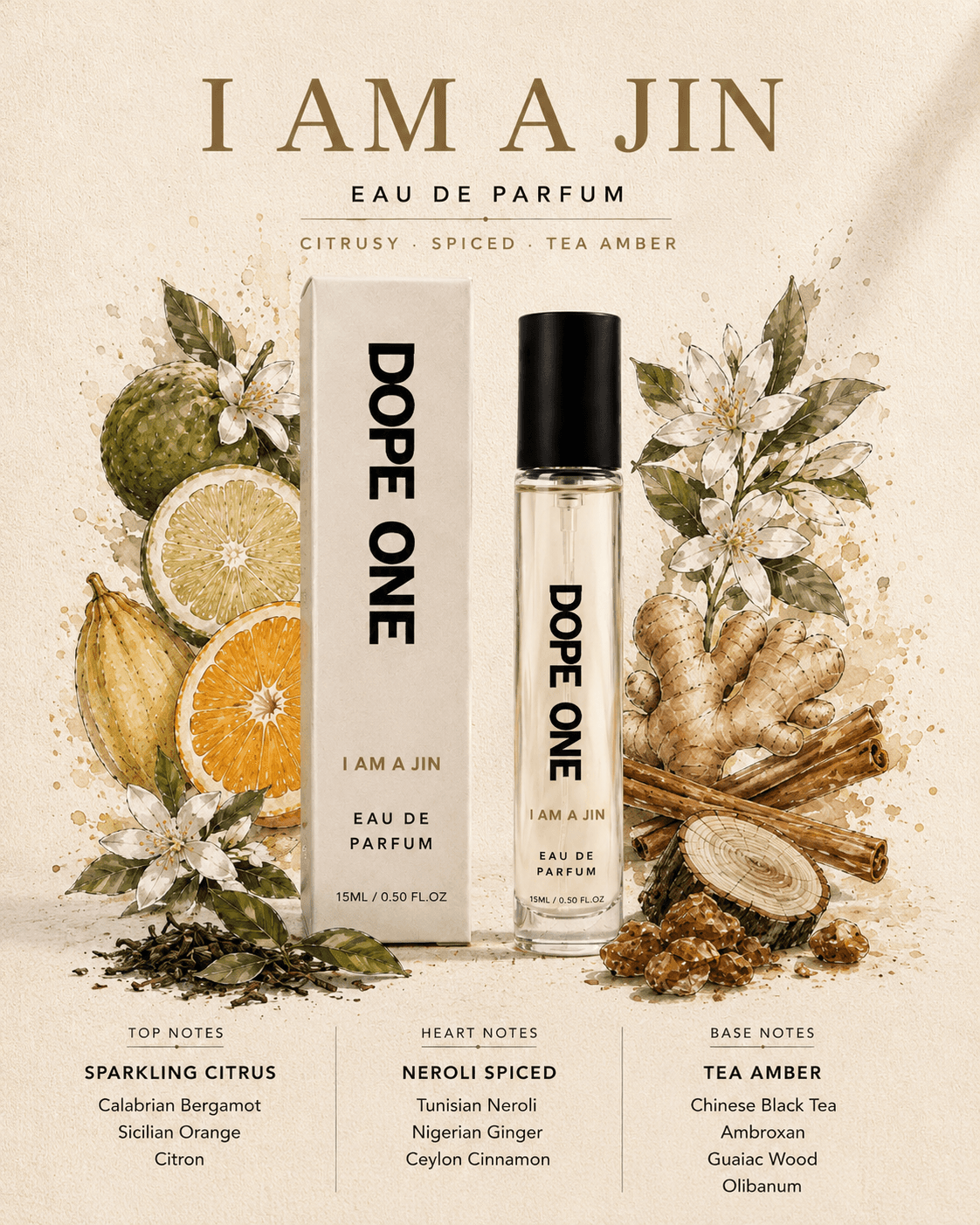
I Am A Jin
Bergamot, neroli, Chinese black tea. The tea is black, not green.
₹419
View →
The distinction between green and black tea is the distinction between Bulgari Eau Parfumee au The Vert and I Am A Jin. Both are tea fragrances. One is fresh and green. The other is warm and spiced. The plant is the same. The processing is different. The result is a completely different fragrance category.
Nobody in India compliments a fragrance. They register it — a second glance, a face that changes as you pass. I've stopped waiting for the sentence and learned to read the pause. By dinner this sits on the skin; next morning it's still on yesterday's tee when I pull it on.
I Am A Jin is ₹419. The tea in it is black, oxidised, and warm, never green. If you want the green side of the leaf, that is Bulgari Eau Parfumee au The Vert rather than this. If you want a warm, spiced black tea that works in Indian weather, I Am A Jin is the option.
Common Questions About Green Tea in Perfumery
What is the difference between green tea and black tea in perfume?
Both come from Camellia sinensis. Green tea is unoxidised: fresh, grassy, hay-like. Black tea is fully oxidised: floral, honeyed, wine-like. The key molecules are geraniol (green) vs beta-damascenone (black). Different processing = completely different smell.
Does India produce tea for perfumery?
No. India produces 1.3 billion kg of tea annually (Assam, Darjeeling, Nilgiris), but not a single leaf is processed for perfumery-grade extract. Perfumery tea materials come from CO₂ extraction of matcha powder or synthetic accords.
Is tea perfume wearable in Indian summer?
Black tea handles Indian summer better than green tea. Black tea's damascenone warmth persists in heat. Green tea's freshness evaporates quickly. Monsoon is the best season for tea fragrances in India.
What is the best tea perfume?
Bulgari Eau Parfumee au The Vert (green tea reference), Le Labo Matcha 26 (matcha reference), Nishane Wulong Cha (most wearable tea), DOPE ONE I Am A Jin (black tea for Indian heat).
Is matcha different from green tea in perfume?
Matcha is shade-grown green tea ground to powder. The aroma is creamier and sweeter than brewed green tea because the whole leaf (including L-theanine and chlorophyll) is consumed. Matcha is the trending format 2024-2026. Le Labo Matcha 26 accelerated the category.
The Same Plant, Two Worlds
Green tea and black tea in perfumery are the same leaf at different points in a chemical transformation. The difference is time and oxygen. India grows more tea than almost any country on earth, yet the Indian tea garden has never contributed a single kilogram of perfumery-grade material. The smoke in Assam, the briskness of Darjeeling, the brightness of Nilgiris all belong to the teacup, not the perfume bottle.
I Am A Jin honours the black tea tradition. The tea in it is not the tea of a Darjeeling garden but the tea of a Chinese processing house. The composition is honest about the source and the character. If green tea ever enters the DOPE ONE palette, it will be as a separate composition, not a variant of this one. The difference between the two teas is the difference between morning and evening, fresh and warm, green and brown. Both are beautiful. They are not interchangeable.
Green tea is the quietest freshness in perfumery, built for proximity rather than projection. Our summer fragrance picks for the subcontinent explains when that restraint is the right call.
Common questions
- What is the difference between green tea and black tea in perfume?
- Both from Camellia sinensis. Green tea: unoxidised, fresh, grassy, geraniol-driven. Black tea: fully oxidised, honeyed, floral, beta-damascenone-driven. Same plant, different processing, completely different smell.
- Does India produce tea for perfumery?
- No. India produces 1.3 billion kg of tea annually (Assam, Darjeeling, Nilgiris). None is processed for perfumery-grade extract. Tea materials come from CO₂ extraction of matcha or synthetic accords.
- Is tea perfume wearable in Indian summer?
- Black tea handles summer better than green tea. Black tea's damascenone warmth persists. Green tea's freshness evaporates quickly. Monsoon is the best season for tea fragrances in India.
- What is the best tea perfume?
- Bulgari Eau Parfumee au The Vert (green tea), Le Labo Matcha 26 (matcha), Nishane Wulong Cha (most wearable), DOPE ONE I Am A Jin (black tea for Indian heat).
- Is matcha different from green tea in perfume?
- Matcha is shade-grown green tea ground to powder. The aroma is creamier and sweeter than brewed green tea because the whole leaf (L-theanine, chlorophyll) is consumed. Trending 2024-2026.