Lemon in Perfumery: The Brightest Note in the Bottle Disappears First
Transparency: we formulate DOPE ONE EMERALD MOSS. Every fragrance here, including ours, is judged on the same criteria: Indian heat performance, fabric longevity, and fidelity to the original's character. Where ours falls short, we say so.
Lemon is the note everyone recognises in the first ten seconds of a fragrance and almost nobody remembers by lunchtime. That's not an accident of bad perfumery. It's chemistry.
What Lemon Actually Is and the Vibe It Carries
The Chemistry
Lemon in perfumery is cold-pressed Citrus limon peel oil, not steam-distilled like many other citrus materials. Cold-pressing preserves the fragile top-note character that heat would otherwise degrade. The oil runs roughly 62 to 70 percent limonene, with a smaller fraction, 2 to 5 percent, of citral responsible for lemon's characteristic sour bite. Limonene is also what makes the note so short-lived: it's highly volatile and oxidises on contact with skin and air, which is why the sharp, sparkling lemon opening of most fragrances is usually gone within 15 to 30 minutes. Most commercial "lemon" notes lean on synthetic limonene and citral reinforcement to hold the impression a little longer than the natural oil alone would allow.
There's also a genuinely underused fact about the fruit itself:Citrus limon is botanically a hybrid, the product of the bitter orange tree crossing with the citron tree. Lemon isn't a "pure" citrus species; it's a cross that happened to produce the sharpest, most universally recognisable citrus scent in the family.
The General Perception
Lemon reads as clean, sharp, and instantly energising, the fragrance equivalent of opening a window. If lemon were a moment, it would be the first sip of something cold on a hot afternoon, vivid, but over almost as soon as it started.
Where Lemon Comes From and How It Earned Its Place
Sourcing
The finest lemon oils are cold-pressed from Sicilian or Amalfi coast peel, regions whose growing conditions produce a particularly bright, clean profile prized by perfumers. Most of the global commercial supply is more broadly Mediterranean or sourced from large citrus-growing regions worldwide.
IFRA Reality
Unrectified cold-pressed lemon oil contains furocoumarins, the same photosensitising compounds found in bergamot oil, which can cause skin reactions in sunlight. IFRA restricts the concentration of furocoumarin-containing citrus oils in leave-on products, and most commercial lemon materials today are furocoumarin-free (FCF) versions, processed to remove the photosensitising compounds while keeping the scent profile intact.
How It Found Its Place in Perfumery
Lemon has been a backbone of Western perfumery since the earliest eaux de cologne, the bright citrus-and-herb compositions built for freshness rather than longevity. That eau de cologne structure, lemon and other citrus oils layered over light herbal and floral notes, is still the direct ancestor of nearly every modern "fresh" or "clean" fragrance category.
Alternatives, If Lemon Isn't for You
| Alternative | What You Get | What You Lose | Best When... |
|---|---|---|---|
| Bergamot | A related citrus brightness with a more floral, Earl Grey-like complexity | Lemon's sharper, more purely sour edge | You want citrus freshness with a softer, rounder character |
| Orange | A sweeter, warmer, less acidic citrus opening | Lemon's sharp, energising sourness | You want citrus brightness without the tartness |
The Indian Perspective on Lemon
The Cultural Anchor
India's citrus landscape leans heavily toward lime, not true lemon. What most Indian households call "lemon" (nimbu) in kitchens and drinks is very often the Kagzi lime, a different fruit with its own distinct chemistry, rather than Citrus limon itself.
Traditional Use
True lemon cultivation exists in pockets, including Maharashtra's citrus belt around Nagpur, but at nowhere near the scale of Sicilian or Amalfi production, and Indian perfumery has never built a lemon-sourcing industry to rival its contributions in materials like sandalwood, vetiver, or jasmine.
The Modern Indian Context
Indian niche and mainstream fragrance use lemon the same way most of the world does, as an imported top note rather than a domestically sourced material, even though the country's own lime-dominant citrus culture gives the ingredient an oddly familiar, everyday resonance.
Who Loves Lemon, and Who Doesn't
Why People Love It
- Instantly recognisable and universally understood as "clean" and "fresh"
- Works in nearly any season, though it particularly shines in Indian summer heat
- A safe, low-risk citrus opening that rarely offends
- Genuinely energising on first application
Why They Won't
- Fades fast, often within the first half hour, leaving little trace of the note that sold the bottle
- Can read as generic or interchangeable with other citrus openings
- Rarely a standout on its own; almost always a supporting top note rather than the main character
- Photosensitivity concerns with unrectified natural oil mean most commercial versions are chemically modified anyway
The honest trade-off: lemon rewards someone who wants an immediate, universally likeable citrus lift and isn't bothered that the note they bought the fragrance for will largely be gone before the first hour is up.
Pairings, Clashes and Real Fragrance Picks
What Lemon Pairs With
Lemon pairs naturally with other citrus and green notes, bergamot in particular, since both share the classic eau de cologne lineage, and with vetiver, whose earthy, rooty depth grounds lemon's brightness into something longer-lasting. Orange extends the citrus register in a sweeter, warmer direction. Lemon clashes with heavy gourmand sweetness and dark resins, which tend to overwhelm its deliberately light, fleeting character.
Our orange guide covers the warmer, sweeter end of the same citrus family, including the two other notes the bitter orange tree yields.
Real Fragrance Recommendations
| Fragrance | Lemon's Role | Price Band (India, approx.) | Heat Performance | Best For |
|---|---|---|---|---|
| 4711 Original Eau de Cologne | The reference classic eau de cologne, lemon and citrus over light florals | ~₹1,200-1,500/100ml | Light and refreshing; built specifically for heat | Anyone wanting the historical, unfiltered eau de cologne experience |
| Guerlain Eau de Cologne Imperiale | A more refined, historic take on the same lemon-forward cologne structure | ~₹9,000-12,000/100ml | Fresh and light; performs well in Indian heat | Fans of classic French perfumery who want elevated materials |
| Jo Malone Lime Basil & Mandarin | Not literal lemon, but a genuinely comparable bright citrus register | ~₹13,000-13,500/100ml | Fresh and easy in warm weather | Wearers who want citrus brightness with a herbal twist |
| DOPE ONE Emerald Moss | Lemon genuinely opens the top notes alongside verbena and peppermint, a real ingredient match, not a citrus-family gesture | ₹419 (15ml) / ₹1,319 (50ml) | Bright opening settles into a clean, woody base; wears well in Indian heat | Anyone who wants an honest lemon opening backed by a fougere structure built to last |
Where DOPE ONE Sits Closest to Lemon
Emerald Moss opens on real lemon, listed first among its top notes alongside verbena and peppermint, before moving into a green, herbal heart and a clean woody base. It's a genuine ingredient match rather than a nearest-neighbour citrus gesture.
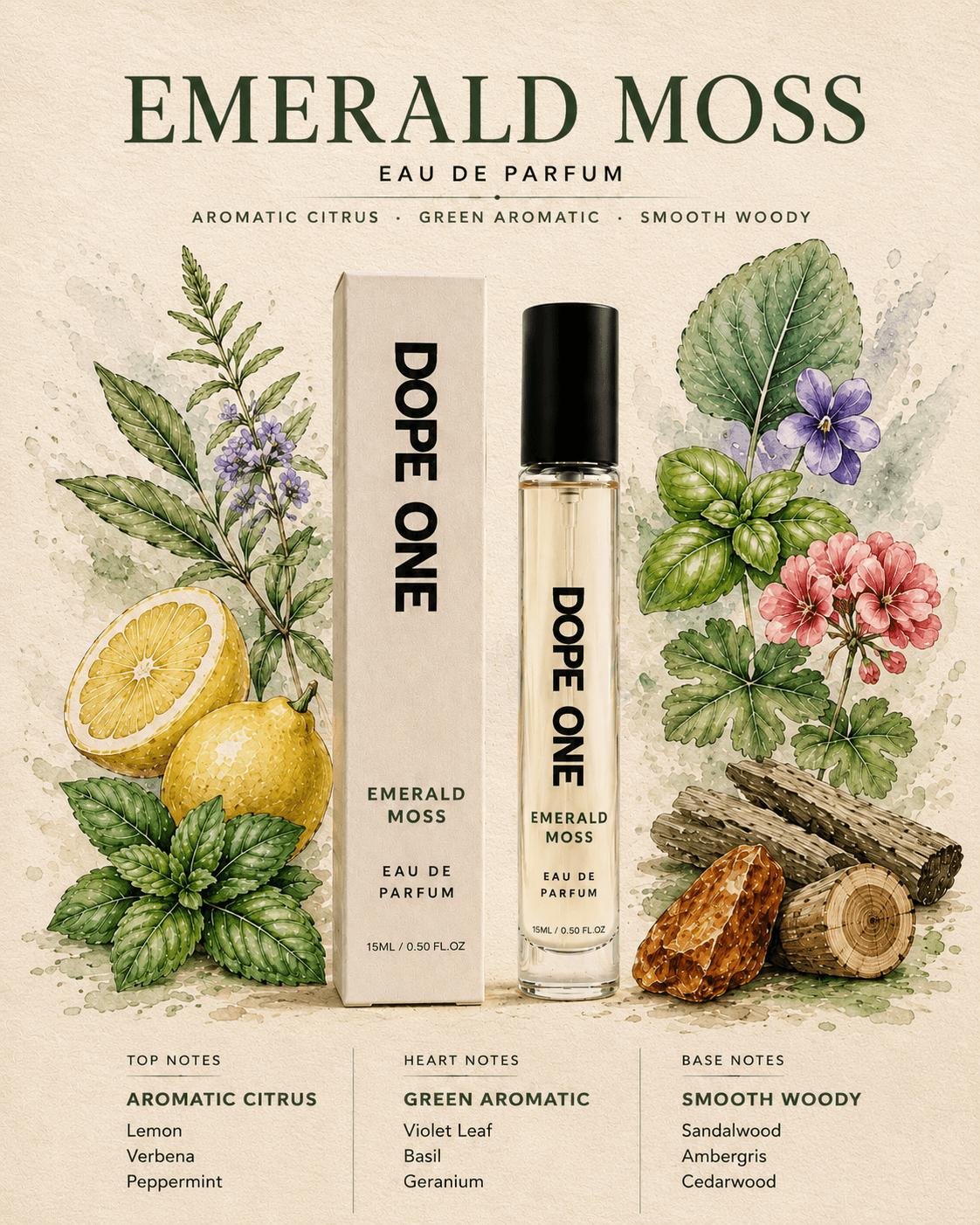
EMERALD MOSS
Classic green fougere structure with refined woods and barbershop clarity.
₹419
View →
A breeze catches your shirt outdoors and you suddenly understand why this style has survived for decades. It never announces you. People are simply more comfortable around you, and conversations run smoother, and nobody can say why.
The honest limitation: like all lemon-forward compositions, Emerald Moss's citrus opening is the shortest-lived phase of the fragrance. What holds it together past that first half hour is the green, woody structure underneath, not the lemon itself.
Lemon in Perfumery: Quick Answers
A few of the most common questions people ask about lemon as a fragrance note, answered directly below.
The Bottom Line on Lemon
Lemon in a bottle is the first sip of something cold on a hot afternoon, vivid, but over almost as soon as it started. That's not a flaw in the fragrances that use it; it's the nature of cold-pressed limonene meeting skin and air. Knowing that going in changes what you should expect from the note, and what you should look for underneath it.
Lemon is the most literal freshness signal in perfumery and the most fragile one in a subtropical climate. Our the summer guide for Indian wearers covers what to reach for when a straight lemon opening will not last the commute.
Common questions
- What does lemon smell like in perfume?
- Sharp, bright, and instantly recognisable as citrus, built from cold-pressed Citrus limon peel oil that's roughly 62-70% limonene with a smaller citral fraction giving its characteristic sour bite.
- Why does lemon perfume fade so fast?
- Limonene, lemon oil's dominant component, is highly volatile and oxidises quickly on skin and in air, which is why the sharp opening typically fades within 15 to 30 minutes.
- Is lemon in perfume real lemon oil or synthetic?
- Often a blend. Natural cold-pressed lemon oil is used, but most commercial fragrances reinforce it with synthetic limonene and citral to help the impression last a little longer than the natural oil alone would.
- Is lemon the same as citrus in perfumery?
- No. Citrus is a broad category that includes lemon, bergamot, orange, grapefruit, and others. Lemon is one specific citrus material with its own distinct, sharper, more purely sour profile.
- Does lemon perfume cause photosensitivity?
- Unrectified natural lemon oil contains furocoumarins, which can cause skin reactions in sunlight. Most commercial lemon materials today are furocoumarin-free (FCF) versions processed to remove that risk.
- What pairs well with lemon in perfumery?
- Lemon pairs naturally with other citrus notes like bergamot and orange, and with vetiver, whose earthy depth grounds lemon's brightness. It clashes with heavy gourmand sweetness and dark resins.