Orange in Perfumery: One Tree, Three Completely Different Notes
Transparency: we formulate DOPE ONE SUN KISS. Every fragrance here, including ours, is judged on the same criteria: Indian heat performance, fabric longevity, and fidelity to the original's character. Where ours falls short, we say so.
One tree gives perfumery three completely different materials, and orange oil is only the most familiar of the three.
What Orange Actually Is and the Vibe It Carries
One Tree, Three Materials
The bitter orange tree is unusual among perfumery plants: its flowers, leaves, and fruit peel each yield their own distinct material. Petitgrain comes from the leaves and twigs, neroli from the blossom, and orange oil from the peel of the fruit itself. Three materials from one plant, each with an entirely different character, structure from petitgrain, softness from neroli, brightness from the peel.
Sweet orange, the material most people mean by "orange" in perfume, was imported to Europe in the 15th century by Portuguese seafarers and quickly became a prized fruit across the Mediterranean. Its oil is cold-pressed from the peel and reads as joyful, juicy, and immediate, a gentler, rounder citrus than lemon and less bitter than bergamot.
The General Perception
Orange reads as friendly and sunlit rather than sophisticated, the citrus note least likely to intimidate anyone. If orange were a moment, it would be peeling the fruit itself on a warm afternoon, sweetness released before you've taken a single bite.
Where Orange Comes From and How It Earned Its Place
Sourcing
Sweet orange oil is cold-pressed from the peel, typically sourced from citrus-growing regions across the Mediterranean basin, Brazil, and the United States. Because the oil is a byproduct of the juice industry, supply is closely tied to global orange harvests.
IFRA Reality
Like other cold-pressed citrus oils, unrectified orange oil can carry phototoxic furocoumarins, and IFRA restricts the concentration of furocoumarin-containing citrus materials in leave-on products. Furocoumarin-free (FCF) orange oil is standard in modern commercial fragrance.
How It Found Its Place in Perfumery
Orange's perfumery significance runs deeper than its own oil: the same bitter orange tree gave rise to neroli and petitgrain, both cornerstones of eau de cologne, one of the oldest fragrance formats still worn today. Orange itself remains one of the most widely used citrus top notes across colognes, fresh florals, and gourmand compositions alike.
Alternatives, If Orange Isn't for You
| Alternative | What You Get | What You Lose | Best When... |
|---|---|---|---|
| Bergamot | A more floral, slightly bitter citrus complexity | Orange's straightforward, joyful sweetness | You want citrus with more sophistication and less sugar |
| Lemon | A sharper, purely sour citrus opening | Orange's rounder, gentler warmth | You want the sharpest possible citrus lift |
Our lemon guide covers the sharper, shorter-lived citrus orange is usually measured against.
The Indian Perspective on Orange
The Cultural Anchor
Nagpur's santra, the Nagpur orange, is one of India's most recognisable citrus fruits, grown across Maharashtra's Vidarbha region and sold in winter markets across the country. It's the fruit most Indians picture when they hear "orange," even though perfumery-grade sweet orange oil is a distinct material sourced separately.
Traditional Use
Orange peel has a long history in Indian kitchens, dried and used in pickles and preserves, but that culinary tradition has no direct link to the fragrance industry's use of orange oil, which is a separate cold-pressed material entirely.
The Modern Indian Context
Indian perfume houses use orange the same way most of the world does, as an imported top note in colognes and fresh compositions, even though the Nagpur santra gives the fruit itself an oddly familiar resonance without any real crossover with the fragrance material.
Who Loves Orange, and Who Doesn't
Why People Love It
- Reads as friendly, joyful, and universally approachable
- Genuinely uplifting and works well in Indian heat as a fresh opening
- A cornerstone material across colognes, florals, and gourmands
- Familiar and comforting rather than demanding attention
Why They Won't
- Fades quickly like most citrus top notes, often within the first 30 minutes
- Rarely the main character of a fragrance; almost always a supporting top note
- Can read as simple or one-dimensional next to more complex citrus like bergamot
- Cheap versions built on synthetic orange oil alone can smell flat or like orange soda
The honest trade-off: orange rewards someone who wants an approachable, joyful citrus opening and doesn't expect it to carry a fragrance much past the first half hour.
Pairings, Clashes and Real Fragrance Picks
What Orange Pairs With
Orange pairs naturally with neroli and warm spice notes like cinnamon, both of which round out its brightness into something fuller and longer-lasting. It clashes with heavy, dark woods that can overwhelm its lighter character entirely.
Our neroli guide covers the second note the same bitter orange tree yields, and our cinnamon guide covers the spice most often set against orange's sweetness.
Real Fragrance Recommendations
| Fragrance | Orange's Role | Price Band (India, approx.) | Heat Performance | Best For |
|---|---|---|---|---|
| Hermes Un Jardin sur le Nil | Sweet orange adds a burst of citrusy sweetness balanced by green and floral notes | ~₹14,000-17,000/100ml | Light and green; performs well in Indian heat | Wearers wanting orange in a green, garden-inspired composition |
| Tom Ford Neroli Portofino | Orange blossom's cousin material, neroli, shown alongside citrus and amber notes for a Mediterranean feel | ~₹18,000-24,000/100ml | Bright opening settles into a warm, ambery base | Understanding how orange's own tree gives an entirely different material in neroli |
| Atelier Cologne Orange Sanguine | A punchier, slightly bitter take on orange as the main event | ~₹15,500-15,700/100ml | Zesty and fresh; fades within the expected citrus window | Fans of a bolder, more assertive orange statement |
| DOPE ONE Sun Kiss | Orange appears twice, once in the top notes alongside bergamot and mandarin, and again in the heart through neroli and orange blossom, a genuine double presence | ₹419 (15ml) / ₹1,319 (50ml) | Bright citrus opening settles into a warm ambroxan-musk base; wears well in Indian heat | Anyone who wants orange carried through both the opening and the heart, not just a fleeting top note |
Where DOPE ONE Sits Closest to Orange
Sun Kiss carries orange in two places at once: in the top notes alongside bergamot and mandarin orange, and again in the heart through neroli and orange blossom. That double presence is exactly what the "one tree, three materials" structure of the real bitter orange plant looks like when built into a single fragrance.
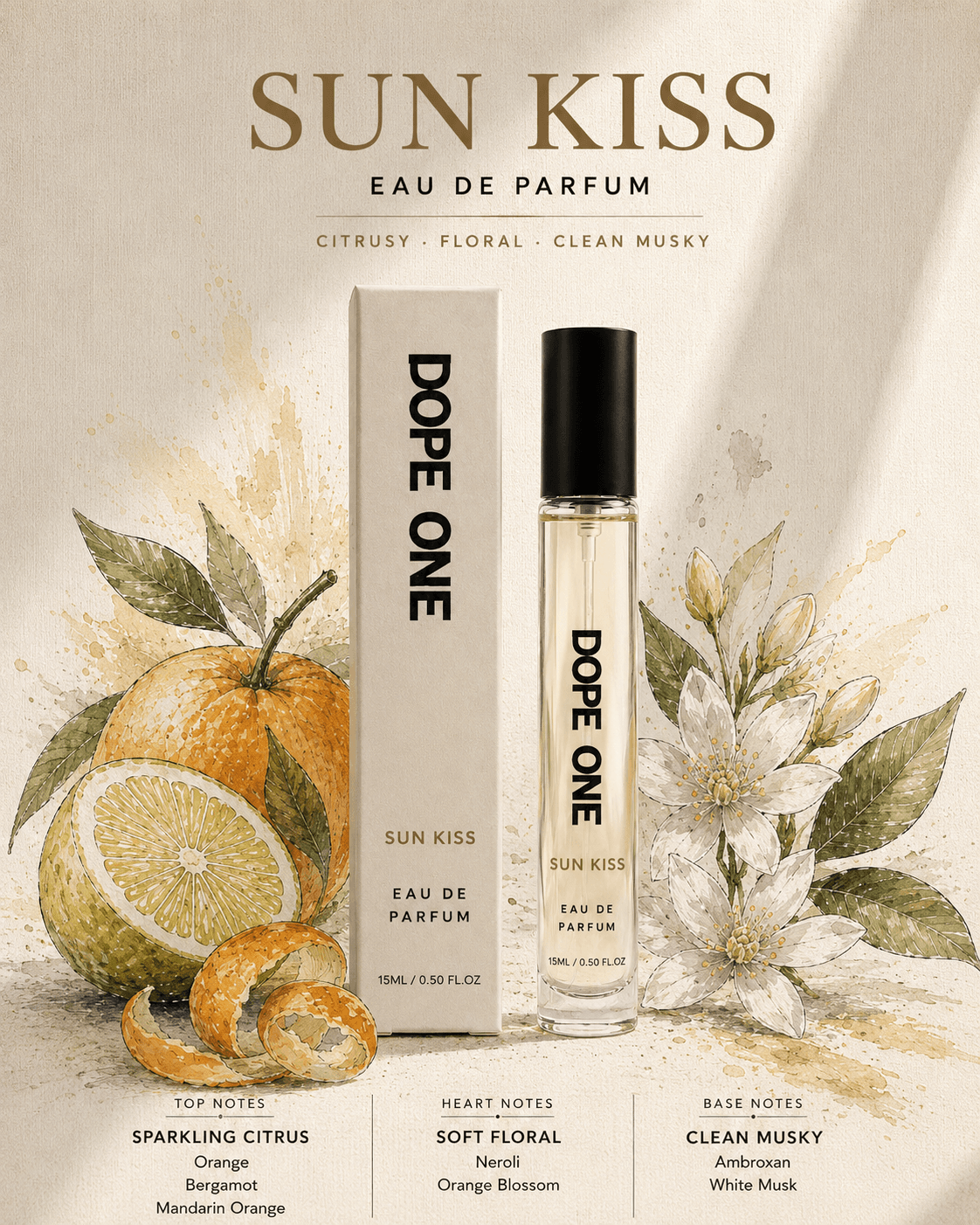
SUN KISS
Bright orange and bergamot opening into neroli, settled on warm ambroxan musk.
₹419
View →
Every now and then a breeze catches your shirt and the citrus comes back to life — those moments are the whole reason to wear it. If Chilled Apricot is sitting under a tree with a cold fruit drink, Sun Kiss is jumping into a swimming pool on a hot afternoon.
The honest limitation: even carried in both the top and heart, orange's brightest impression still belongs to the first thirty minutes. What holds Sun Kiss together afterward is the ambroxan-musk base, not the orange itself.
Orange in Perfumery: Quick Answers
A few of the most common questions people ask about orange as a fragrance note, answered directly below.
The Bottom Line on Orange
Orange in a bottle is peeling the fruit itself on a warm afternoon, sweetness released before you've taken a single bite. That familiar burst is only one of three materials the same tree gives perfumery, alongside neroli from the blossom and petitgrain from the leaves. Knowing that changes how you read every citrus-and-floral fragrance built around this single plant.
Sweet orange is the friendliest citrus on the shelf, which also makes it the one most often wasted on the wrong season. Our warm-weather picks for Indian conditions puts it in context against the aquatics and greens it competes with.
Common questions
- What does orange smell like in perfume?
- Sweet, juicy, and joyful, gentler and rounder than lemon and less bitter than bergamot. It's the friendliest, most approachable citrus note in perfumery.
- Is orange the same as neroli in perfumery?
- No, though both come from the same bitter orange tree. Orange oil is cold-pressed from the peel; neroli is distilled from the blossom. They smell completely different, orange is bright and juicy, neroli is floral and soft.
- Why does orange fade so fast in perfume?
- Like most citrus top notes, orange oil is highly volatile and evaporates quickly, typically within the first 30 minutes. Longevity in an orange-forward fragrance usually comes from the base notes built underneath it.
- Is orange perfume the same as citrus?
- No. Citrus is a broad category that includes orange, lemon, bergamot, grapefruit, and others. Orange is one specific citrus material with its own distinct sweet, juicy profile.
- What's the difference between orange oil and orange blossom?
- Orange oil is cold-pressed from the fruit's peel and smells bright and juicy. Orange blossom (neroli) is distilled from the flower and smells soft, floral, and green. Both come from the same bitter orange tree but are entirely different materials.
- What pairs well with orange in perfumery?
- Orange pairs naturally with neroli and warm spice notes like cinnamon, both of which round out its brightness. It clashes with heavy, dark woods that can overwhelm its lighter character.