Neroli in Perfumery: Three Oils From One Tree
Transparency: we formulate DOPE ONE I Am A Jin. Every fragrance here, including ours, is judged on the same criteria: Indian heat performance, fabric longevity, and fidelity to the original's character. Where ours falls short, we say so.
One tree. Three oils. The bitter orange tree, Citrus aurantium, produces neroli from its flowers (steam-distilled), orange blossom from its flowers (solvent-extracted), and petitgrain from its leaves and twigs (steam-distilled). The three oils smell related enough that beginners confuse them and distinct enough that a perfumer can identify each blindfolded. Together they form one of the most versatile botanical families in perfumery: a single tree that can deliver fresh citrus, sweet floral, and woody-herbal characters depending on which part is harvested and how it is processed.
India does not grow bitter orange for perfumery. The tree thrives in Mediterranean climates and is cultivated commercially in Morocco, Tunisia, Italy, France, and Egypt. India's Himalayan foothills could support bitter orange cultivation, but the processing infrastructure for perfumery-grade essential oils does not exist at scale. The neroli in I Am A Jin is Tunisian. The black tea is Chinese. The bergamot is Calabrian. I Am A Jin is an Indian perfume made from three continents, precisely because the raw materials India grows best (cardamom, sandalwood, vetiver) are not the ones this composition requires.
What Neroli Actually Is in Perfumery
Neroli essential oil is produced by steam-distilling the freshly picked flowers of the bitter orange tree (Citrus aurantium amara). The flowers must be hand-picked early in the morning when the oil content is highest, and distilled within hours of picking. The yield is roughly 0.1-0.2% of flower weight. One kilogram of neroli oil requires approximately 500-1,000 kilograms of fresh flowers.
The primary aroma molecules in neroli are linalool (CAS 78-70-6), a terpene alcohol that provides the sweet, floral-citrus character, and linalyl acetate (CAS 115-95-7), an ester that adds a fruity, herbaceous lift. Methyl anthranilate (CAS 134-20-3) contributes a unique grapey, slightly wine-like undertone that distinguishes neroli from other floral-citrus oils. Limonene (CAS 5989-27-5) provides the fresh citrus top note. The combination of these molecules creates a profile that is simultaneously floral and fresh, sweet and clean, complex and immediately recognisable.
| Material | Source | Method | Cost/kg | Character |
|---|---|---|---|---|
| Neroli | Fresh flowers | Steam-distilled | ₹8,000-15,000 | Fresh, floral-citrus, clean. Linalool-dominant. The highest and brightest of the three. |
| Orange Blossom Absolute | Fresh flowers | Solvent-extracted | ₹10,000-20,000 | Rich, sweet, honeyed, indolic. Methyl anthranilate-dominant. Deeper and more sensual than neroli. |
| Petitgrain (Bigarade) | Leaves and twigs | Steam-distilled | ₹2,000-5,000 | Herbal, woody, green-citrus. Linalyl acetate-dominant. The structural workhorse of the family. |
Neroli is the person who walks into a room and does not need to be introduced. It is not the most complex note in the palette, but it is the one that announces itself with the most grace. If bergamot is the smile and rose is the conversation, neroli is the handshake: confident, brief, and memorable.
How Neroli Entered Perfumery
Neroli is named after Anne-Marie de la Tremoille, Princess of Nerola, Italy, who popularised the oil in 17th-century European courts. She used neroli to scent her gloves, bath, and linen. The association of neroli with cleanliness and refinement dates to this period. Neroli-water (eau de fleur d'oranger) became a staple in European aristocratic toilets.
The bitter orange tree was brought to Europe from its native Southeast Asia by Arab traders and later by Crusaders. The tree naturalised across the Mediterranean, finding ideal conditions in Morocco, Tunisia, Sicily, and the South of France. Today, Tunisia and Morocco are the dominant neroli producers, with French neroli (from Grasse) commanding the highest prices. The distinction between Tunisian neroli (bright, fresh) and Moroccan neroli (richer, more floral) is well-established in the industry.
In Indian perfumery, orange blossom is used in several traditional attars but neroli specifically is rare. The attar tradition favours rose, jasmine, and sandalwood. Neroli arrived in India through European perfumery and is most associated with the citrus-fresh category that emerged in the 1990s with Acqua di Gio and CK One. The note is now a staple of the fresh-floral category and the heart note of many of the most commercially successful fragrances of the last three decades.
If Neroli Is Out of Reach
| Alternative | What You Get | What You Lose |
|---|---|---|
| Petitgrain (Bigarade) | The same tree, different part. Petitgrain provides the neroli-like floral-citrus character through linalool and linalyl acetate at a fraction of the cost. | No floral sweetness. Petitgrain is woody and herbal where neroli is floral and sweet. Useful as a structural substitute, not an olfactory one. |
| Linalool + Linalyl Acetate | The two primary molecules of neroli, blended to recreate the floral-citrus profile synthetically. | No methyl anthranilate grapey undertone. The blend smells correct but flat compared to the complexity of the natural oil. |
| Neroli Synthetic (Firmenich, Givaudan bases) | Specialised recreations developed by aroma chemical houses to approximate the neroli profile for commercial perfumery. | The top note is convincing. The dry-down is not. Natural neroli evolves on skin in ways that synthetic bases cannot replicate. |
| Bergamot + Lavender | A fresh-floral-citrus combination that approximates the brightness of neroli without using orange blossom material. | No floral grace. Bergamot-lavender is lovely but reads as cologne rather than neroli. Different category entirely. |
How Neroli Behaves on Indian Skin
| Season | What Neroli Does | Verdict |
|---|---|---|
| Summer (35-45°C) | Neroli's fresh floral-citrus top evaporates faster than any other note in the composition. The linalool lift lasts 15-30 minutes. The methyl anthranilate undertone persists but reads as sweet rather than fresh. | Good for the first 30 minutes. Needs reapplication or a strong woody base to carry the floral impression beyond the top note. |
| Monsoon (80%+ RH) | Humidity extends the life of the floral-citrus top. Linalool evaporates slower in moisture-heavy air. The best Indian season for neroli. | Excellent. Neroli's best Indian season. |
| Winter (5-20°C) | Full neroli performance. The floral-citrus top lasts 45 minutes to an hour. The heart transitions into the base gracefully. | Excellent. Neroli performs at its fullest in cool air. |
The Indian rule for neroli: it is a top note. Accept that it will lead the composition for the first thirty minutes and then recede. The key to neroli's success in Indian wear is not the neroli itself but what supports it. A neroli fragrance with a strong woody, musky, or tea-based base will carry the floral impression beyond the top note's evaporation. I Am A Jin's black tea base is designed for this: the neroli opens, the tea extends the floral character into the heart, and the base persists.
Who Neroli Is For
Neroli attracts the wearer who wants to smell clean without smelling of soap. It is the note for someone who has discovered that fresh does not have to mean citrus and floral does not have to mean heavy. Neroli wearers tend to be people who wear fragrance as a complement to their presence rather than a statement of it.
| Who It Is For | Why It Works |
|---|---|
| Wearers who want fresh florals | Neroli is the brightest floral note in the palette. No indolic heaviness, no powdery dust. Just clean floral freshness. |
| Indian evening summer wear | Neroli is the perfect evening top note for Indian summer. It opens fresh, the base carries, and the overall impression is clean. |
| Wearers who love citrus-floral blends | Neroli is the natural connection between citrus and floral. It bridges bergamot and jasmine, orange and rose, lemon and lavender. |
| Who It Is Not For | Why It Fails |
|---|---|
| Wearers who want longevity | Neroli is a top note. It burns fast in heat. If you want a note that lasts six hours, neroli will frustrate you. |
| Wearers who dislike "cologne" associations | Neroli is the defining note of classic Eau de Cologne (4711, Acqua di Colonia). If cologne reads as generic or cheap, neroli carries that association. |
| Wearers who prefer heavy orientals | Neroli is lightness itself. If your register is oud, tobacco, and leather, neroli will read as insubstantial. |
What Neroli Plays Well With
Neroli is one of the most sociable top notes in perfumery. It pairs well with almost everything because its floral-citrus profile is close enough to neutral to be a bridge rather than a destination.
Neroli and bergamot is the I Am A Jin opening. Bergamot provides the sharp citrus sparkle. Neroli provides the floral grace. Together they create one of the most beautiful citrus-floral openings in perfumery. Our bergamot guide documents the full citrus side of the architecture.
Neroli and black tea is the I Am A Jin heart. Black tea's tannic bitterness cuts neroli's sweetness and extends the floral character into the dry-down. The pairing is a tribute to the English breakfast tea tradition and the reason I Am A Jin reads as a tea fragrance rather than a citrus cologne.
Neroli and jasmine is the classic white floral pairing. Jasmine pushes neroli towards the indolic register. Neroli keeps jasmine from becoming too heavy. The result is the most beautiful white floral accord in perfumery.
What Does Not Work With Neroli
Neroli and strong leather notes can clash. The clean floral character fights with the animalic weight. Neroli and heavy gourmand notes (caramel, chocolate) overwhelm each other; both are sweet in different registers and the combination is dissonant.
Five Neroli Fragrances Worth Wearing
| Fragrance | Neroli Character | Price Band (India) | Heat Performance | Best For |
|---|---|---|---|---|
| Tom Ford Neroli Portofino | Neroli + bergamot + lavender + amber. The reference luxury neroli. Bright, clean, Mediterranean. | ₹18,000-22,000 | Excellent heat tolerance. The neroli-amber base is practically designed for summer. | Understanding luxury neroli. Year-round fresh signature. |
| Acqua di Parma Colonia | Neroli + bergamot + rosemary + lavender. The reference cologne neroli. The classic since 1916. | ₹8,000-10,000 | Cologne format = short duration. Excellent for the first hour. Needs reapplication in heat. | Understanding the cologne tradition. The historical neroli reference. |
| Jo Malone Orange Blossom | Neroli + watercress + orange blossom + lilac. The reference orange blossom (the darker, richer sibling of neroli). | ₹8,000-10,000 | Orange blossom's richness lasts longer than neroli. Better heat performance than pure neroli. | Understanding the neroli vs orange blossom distinction. |
| 4711 Eau de Cologne | Neroli + lemon + orange + petitgrain. The original cologne, in production since 1792. The cheapest way to understand neroli as a note. | ₹800-1,200 | Lasts 20 minutes in Indian heat. The reference for neroli's transient beauty. | Understanding neroli at its most affordable. The historical entry point. |
| DOPE ONE I Am A Jin | Bergamot + neroli + black tea. Neroli is the heart note that bridges citrus and tea. The Indian summer neroli. | ₹419 / ₹1,319 | Black tea base extends the neroli impression beyond the top note. Designed for Indian heat. | Understanding neroli as a bridge note. Year-round fresh floral. |
Regulatory Considerations
Neroli oil has no significant IFRA restrictions. It is one of the safest essential oils in the perfumer's palette. The only caution is limonene content (a potential skin sensitiser at high concentrations), which is present in most neroli oils at 5-15%. At typical usage levels in fine fragrance (1-5% of the concentrate), this is well within regulatory limits.
I Am A Jin: Neroli as the Bridge
I Am A Jin uses neroli in a way that understands and accepts the note's limitations. Neroli tops out at thirty minutes of prominence. I Am A Jin does not try to extend neroli unnaturally. It places neroli at the bridge point between bergamot and black tea: the bergamot opens, the neroli adds floral grace, and the black tea extends the floral impression into the heart. The neroli is not fighting for longevity. It is doing its job as the transition note.
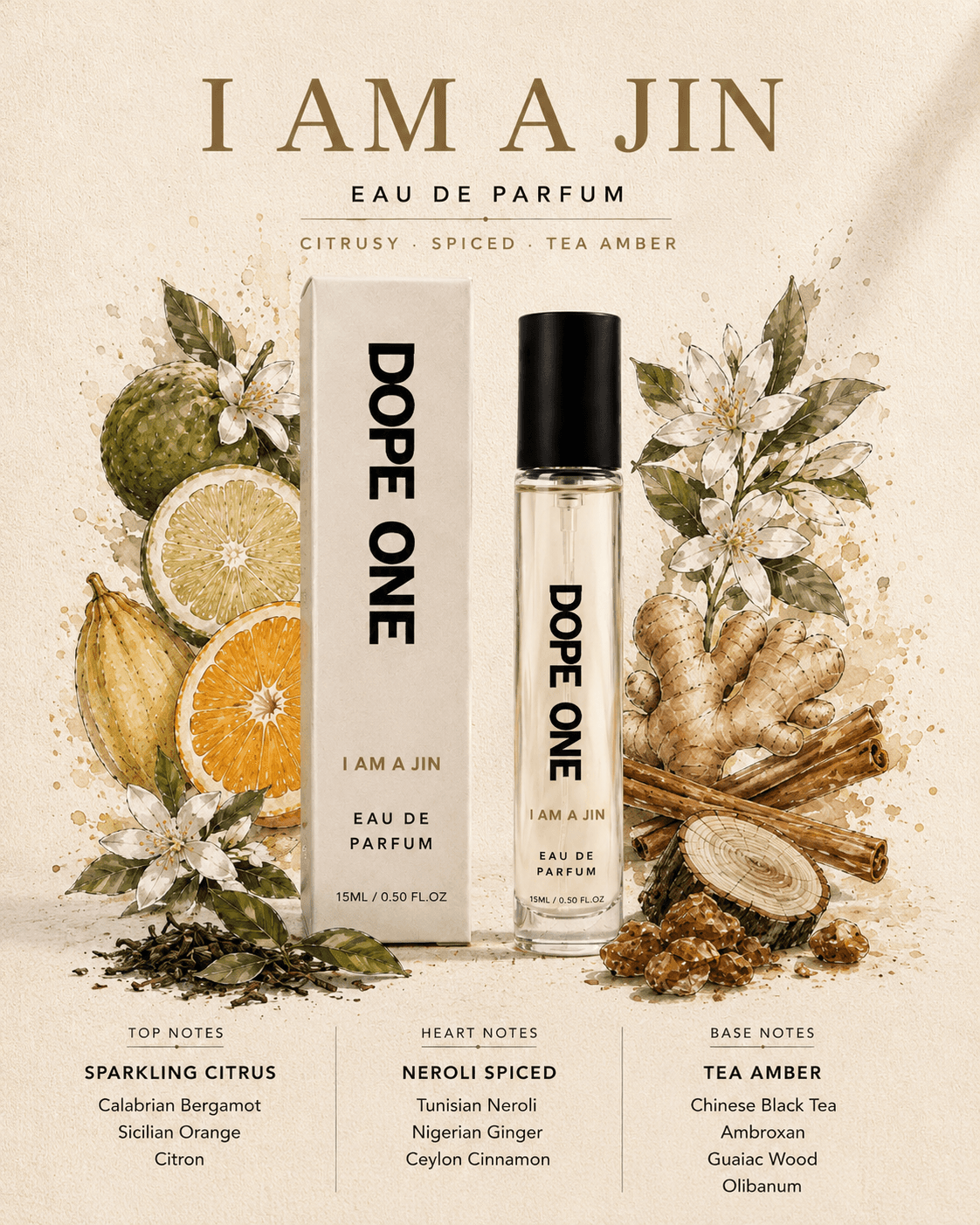
I Am A Jin
Bergamot, neroli, black tea. Neroli bridges the citrus and the tea.
₹419
View →
The neroli in I Am A Jin is Tunisian, chosen for its brightness and freshness over the richer, more floral Moroccan variety. The fragrance is an Imagination-inspired composition, and the original uses a fresh neroli that opens the composition without dominating it. The Tunisian neroli in I Am A Jin does exactly that: it arrives, it adds character, it hands off to the tea, and it fades. The neroli that knows when to leave is the most valuable neroli in the composition.
Nobody in India compliments a fragrance. They register it — a second glance, a face that changes as you pass. I've stopped waiting for the sentence and learned to read the pause. By dinner this sits on the skin; next morning it's still on yesterday's tee when I pull it on.
I Am A Jin is ₹419. The neroli lasts half an hour. The impression lasts the evening. That is the deal.
Common Questions About Neroli in Perfumery
What is the difference between neroli and orange blossom?
Both come from the same flower of the bitter orange tree (Citrus aurantium). Neroli is steam-distilled: fresh, bright, floral-citrus. Orange blossom is solvent-extracted: rich, sweet, honeyed, indolic. Neroli is the top note. Orange blossom is the heart note. Different processing, different character.
What is petitgrain?
Petitgrain (specifically petitgrain bigarade) is distilled from the leaves and twigs of the same bitter orange tree. It is woody, herbal, and green-citrus where neroli is floral and sweet. Petitgrain costs ₹2,000-5,000/kg, making it the most affordable material from the bitter orange tree family.
Does neroli last long in perfume?
Neroli is a top note. It typically lasts 15-30 minutes on skin in Indian summer, longer in air conditioning and winter. The longevity depends on what supports it. A neroli fragrance with a strong woody or tea base will carry the floral impression beyond the top note's evaporation.
Is neroli perfume wearable in Indian summer?
Yes, with the understanding that it will be a short-lived top note. Neroli's fresh floral character is perfect for Indian summer openings. The key is pairing it with a base that extends the impression. I Am A Jin's black tea base is designed for this.
What is the best neroli perfume?
Tom Ford Neroli Portofino (luxury reference), Acqua di Parma Colonia (historical reference), Jo Malone Orange Blossom (orange blossom reference), 4711 (cheapest entry to the note), DOPE ONE I Am A Jin (neroli-as-bridge, built for Indian heat).
The Note That Knows When to Leave
Neroli is a top note. It will not last through dinner. It will not be on tomorrow's collar. It arrives, it fills the room for the first conversation, and it departs. This is not a weakness. It is the character of the note. The bitter orange tree produces flowers that open and fall within a day; the oil distilled from those flowers behaves the same way. Neroli teaches the wearer that not every note needs to persist. Some notes are gifts for the first impression.
I Am A Jin understands this. The bergamot opens. The neroli bridges. The tea carries. The neroli leaves when its job is done. That is what makes the composition work: not fighting the limits of the material but working within them.
Neroli sits between citrus and white floral, and that dual character is exactly what makes it a warm-weather note rather than a spring one. Our our guide to summer wear in India places it among the fresher options worth owning.
Common questions
- What is the difference between neroli and orange blossom?
- Both from Citrus aurantium flowers. Neroli is steam-distilled (fresh, bright, floral-citrus). Orange blossom is solvent-extracted (rich, sweet, honeyed, indolic). Same flower, different process, different character.
- What is petitgrain?
- Petitgrain bigarade is distilled from leaves and twigs of the bitter orange tree. Woody, herbal, green-citrus. Costs ₹2,000-5,000/kg vs neroli's ₹8,000-15,000/kg. Same tree, different part.
- Does neroli last long in perfume?
- Neroli is a top note lasting 15-30 minutes on Indian summer skin. Longevity depends on the supporting base. I Am A Jin's black tea base extends the floral impression beyond the top note.
- Is neroli perfume wearable in Indian summer?
- Yes, as a short-lived top note. It pairs best with a woody or tea base that carries the impression. I Am A Jin is built for this: neroli opens, tea extends, base persists.
- What is the best neroli perfume?
- Tom Ford Neroli Portofino (luxury), Acqua di Parma Colonia (historical), Jo Malone Orange Blossom (orange blossom reference), 4711 Eau de Cologne (cheapest entry), DOPE ONE I Am A Jin (built for Indian heat).