Tobacco in Perfumery: The Note That Has Nothing to Do With Smoking
Transparency: we formulate DOPE ONE Date Night. Every fragrance here, including ours, is judged on the same criteria: Indian heat performance, fabric longevity, and fidelity to the original's character. Where ours falls short, we say so.
Tobacco in perfumery is one of the most misunderstood notes in existence. Most people read "tobacco" on a fragrance pyramid and assume they will smell ash, smoke, and stale pub carpets. They will not. Tobacco absolute smells like honeyed hay drying in a sunlit barn, like raisins and dried apricots, like warm leather that has been handled for years. It is sweet. It is rich. It is closer to dried fruit than to a cigarette. The only thing tobacco absolute has in common with smoking is that both come from the same plant. The similarity ends at the farm gate.
This article covers what tobacco actually is in perfumery, the difference between tobacco absolute and tobacco accord, how tobacco behaves on Indian skin, which pairings create the best tobacco compositions, and whether tobacco can be worn in Indian summer without smelling like an ashtray.
What Tobacco Actually Is in Perfumery
The material used in perfumery is tobacco absolute, produced by solvent-extracting cured leaves of Nicotiana tabacum. The leaves are harvested, cured (dried) for several weeks using air, sun, or flue curing depending on the desired character, and then extracted with hexane or ethanol. The yield is roughly 2-5% of leaf weight, depending on the cultivar and curing method. Virginia tobacco (flue-cured) produces a sweeter, more hay-like absolute. Turkish tobacco (sun-cured) produces a more spicy, floral, and incense-like character. Burley (air-cured) gives a darker, earthier, more leathery material.
The key aroma molecules in tobacco include solanone (CAS 1937-54-8), a terpenoid ketone that gives tobacco its characteristic warm-spicy character; damascenone (CAS 23696-85-7), a rose-ketone that contributes the fruity-honeyed facet; and beta-damascenone, which adds a cooked apple and plum dimension. Nicotine (CAS 54-11-5) is present in trace amounts but has almost no smell at the concentrations used in perfumery. The smokiness that people associate with tobacco comes not from the absolute but from birch tar or cade oil used in accords designed to mimic pipe tobacco, cigar smoke, or cigarette ash.
Most tobacco fragrances do not use real tobacco absolute at all. They use tobacco accords: blends of molecules like methyl dihydrojasmonate, vanillin, davana, labdanum, and methyl cedryl ketone that approximate the tobacco character at a fraction of the cost. Real tobacco absolute costs ₹25,000-50,000 per kilogram. A tobacco accord costs ₹1,000-3,000 per kilogram. The difference is detectable to an experienced nose: real tobacco absolute has depth, sweetness, and evolution on skin that an accord cannot replicate. The accord smells correct in the first minute. The absolute smells different at hour three than it did at minute one.
Tobacco is the note that smells like a room rather than a person. It evokes libraries with leather chairs, old wooden furniture dried by afternoon sun, the warm cabinet where tea and spices are stored. If rose is the person everyone wants to sit next to and oud is the one in the corner you keep glancing at, tobacco is the chair they are both sitting on: warm, steady, present, unnoticed until it is not there.
Tobacco's Journey Into Perfumery
Tobacco entered perfumery in the 19th century alongside the rise of the gentleman's club, the cigar lounge, and the association of "masculine elegance" with cured tobacco leaf. Early tobacco perfumes were literal: they smelled of cigars because they contained cigar absolute. Caron's Tabac Blond (1919) was the first great tobacco fragrance, built around tobacco absolute, vanilla, musk, and leather. It was worn by women as a statement of liberation as much as of fragrance. Creed's Tabarome (1875/1996) used tobacco with ginger and mandarin to create a fresher, more wearable tobacco.
The modern tobacco era began with Tom Ford's Tobacco Vanille (2007). It paired tobacco absolute with vanilla, cacao, and dried fruit to create a gourmand that did not smell like food, the same edible-but-not-literal territory the gourmand family occupies more broadly. It was the most successful tobacco launch in perfumery history and the reason every brand now has a tobacco entry. Tobacco Vanille desentimentalised tobacco as a note. Before 2007, tobacco fragrances were serious, old-fashioned, and clubby. After Tobacco Vanille, they could be warm, inviting, and wearable in mixed company.
India is one of the world's largest tobacco producers. Gujarat leads with the flue-cured Virginia tobacco used in Indian cigarettes; Andhra Pradesh and Karnataka are the other major growing states. Yet virtually no Indian tobacco is processed for perfumery absolute. The tobacco absolute trade is dominated by American, Italian, Greek, and Turkish leaf. Indian tobacco farmers sell to cigarette manufacturers, not to fragrance houses. The raw material exists. The supply chain does not. This is the same gap as Indian vanilla: India grows the crop but exports the value-added processing to Europe.
If Tobacco Is Too Heavy
| Alternative | What You Get | What You Lose |
|---|---|---|
| Davana | A green, fruity, slightly tea-like note with tobacco warmth. The herbal-tobacco bridge. Used in modern tobacco accords as a natural alternative. | No honeyed depth, no leather. Davana is tobacco's younger cousin who went to art school. |
| Mate Absolute | A dried herbal-green note with a smouldering, slightly smoky undertone. Tobacco-adjacent for wearers who want warmth without sweetness. | No richness. Mate is austere, dry, and takes effort to love. Not for the three-spray crowd. |
| Birch Tar (Rectified) | The molecular source of the smoky-ash character. Used in accords to create the "cigar lounge" effect. | Overwhelming at high doses. One drop too many and your tobacco accord smells like a bonfire. |
| Labdanum (Cistus) | A resinous, amber-warm, slightly leathery note that has been used as a tobacco extender for centuries. | More amber than tobacco. Labdanum provides the warmth but not the leaf character. |
How Tobacco Behaves on Indian Skin
| Season | What Tobacco Does | Verdict |
|---|---|---|
| Summer (35-45°C) | Tobacco absolute deepens and becomes honey-sweet. The dried fruit character amplifies. Can read as cloying within two hours unless balanced by citrus or fresh wood. | Evening only. Pair with bergamot or pink pepper. One spray maximum. |
| Monsoon (80%+ RH) | Humidity softens the honeyed sweetness. Tobacco becomes leathery and slightly dusty. The warm barn character emerges. | Good. Tobacco's most interesting season. The leaf character reads clearly. |
| Winter (5-20°C) | Full performance. Tobacco is at its most complete: warm, sweet, leathery, evolving. The absolute's complexity becomes legible over hours. | Excellent. Tobacco's natural climate. A well-made tobacco fragrance is unbeatable in Indian winter. |
The Indian rule for tobacco: never wear pure tobacco absolute in summer. The honeyed richness becomes cloying above 35°C. Tobacco compositions balanced by citrus, fresh spice, or green notes (tobacco-bergamot, tobacco-iris, tobacco-ginger) work year-round. Tobacco-vanilla and tobacco-oud are evening and winter territory. Monsoon is tobacco's best Indian season; the humidity softens the sweet edges and reveals the leathery, dusty character that makes tobacco different from every other note.
Who Tobacco Is For
Tobacco attracts the wearer who wants their fragrance to have weight without announcing itself. It is the note for someone who has moved past the need for compliments and wants instead to smell like a person with history. Tobacco wearers tend to be older, more settled, or simply more confident than the average fragrance drinker. They do not need the room to notice. They need the room to feel.
| Who It Is For | Why It Works |
|---|---|
| Evening and winter wearers | Tobacco's warmth and sweetness are at their best in cool temperatures. A tobacco fragrance worn at a winter party invites in a way that a citrus does not. |
| The "I don't wear perfume" wearer | Tobacco does not smell like "perfume" to most people. It smells like a person who smells good. Tobacco wears like an aura rather than a scent. |
| Wearers who want to smell different | Tobacco is less common than vanilla, musk, or ambroxan in India. A well-chosen tobacco fragrance reads as considered rather than generic. |
| Who It Is Not For | Why It Fails |
|---|---|
| Wearers who dislike sweet fragrances | Tobacco absolute is fundamentally sweet: honeyed, fruity, warm. If you dislike vanilla or tonka for being too gourmand, tobacco may read as equally heavy. |
| Indian daytime summer wear | Tobacco becomes cloying above 35°C. Save it for evenings, monsoons, and winters. A tobacco-heavy composition in a Delhi afternoon is a regrettable decision within an hour. |
| Wearers with strong cigarette associations | If tobacco absolute reminds you of smoking, no amount of "but it smells like honey and hay" will fix it. The association is emotional, not olfactory. Prefer mate or davana instead as a tobacco-adjacent entry point. |
What Tobacco Plays Well With
Tobacco is one of the most versatile base notes in perfumery. Its honeyed warmth complements almost everything except sharp green notes and aggressive citruses.
Tobacco and vanilla is the most famous pairing, popularised by Tom Ford Tobacco Vanille. Tobacco provides the dried fruit and hay character; vanilla adds creaminess and rounds the edges. The result is a winter gourmand that reads as warm rather than edible. Our vanilla guide maps the full range of vanilla expressions.
Tobacco and oud is the darker, more serious pairing. Oud's animalic depth cuts tobacco's sweetness and adds a leathery, smoky dimension. The pairing works particularly well in Indian winters, where the heaviness of both notes is an advantage rather than a liability.
Tobacco and iris creates an elegant, dusty, almost vintage character. Iris's earthy rootiness dries out tobacco's sweetness and gives it a powder-fresh dimension. This is the pairing behind Prada Amber Pour Homme and several classic Italian tobacco compositions. Our iris guide explains why that material costs what it does.
What Does Not Work With Tobacco
Tobacco and strong aquatic notes clash. Aquatic notes pull the composition in the opposite direction of tobacco's warmth, creating a disjointed sensation of "wet cold meets warm dry." Tobacco and high-dose white florals (jasmine, tuberose) can become overwhelming; both are sweet and persistent, and together they can reach a level of intensity that drowns out the composition's nuance.
Five Tobacco Fragrances Worth Wearing
| Fragrance | Tobacco Character | Price Band (India) | Heat Performance | Best For |
|---|---|---|---|---|
| Tom Ford Tobacco Vanille | The reference. Tobacco absolute + vanilla + cacao + dried fruit. Created the modern tobacco category in 2007. | ₹18,000-22,000/50ml | Winter only. Vanilla + tobacco = cloying above 30°C. | Understanding what tobacco can be. Winter evening signature. |
| Herod (Parfums de Marly) | Tobacco + cinnamon + vanilla + incense. A spicy, warm tobacco gourmand. More wearable than Tobacco Vanille. | ₹18,000-20,000/125ml | Cinnamon cuts the sweetness. Fair warmth tolerance. | Year-round tobacco entry point. The most Indian-summer-friendly tobacco. |
| Rasasi La Yuqawam Tobacco Blaze | A tobacco-raspberry-leather composition that punches above its price. The budget tobacco reference. | ₹9,500-11,500/75ml | Raspberry + leather handles moderate heat. Not for Indian summer. | Budget tobacco entry. Understanding the accord-based approach. |
| NEESH Tobacco Vanilla | Indian niche brand. Tobacco + vanilla extrait. Direct Tobacco Vanille competitor at a fraction of the price. | ₹5,500-7,100/100ml | Same constraints as Tobacco Vanille. Winter and evening only. | Understanding the Indian niche interpretation of tobacco. |
| DOPE ONE Date Night | No tobacco in the formula. Ginger, woody notes and bourbon vanilla sit in the nearest warm-gourmand register the line offers. | ₹419 / ₹1,319 | Ginger cuts sweetness. Designed for Indian evenings. | Evening tobacco pairing. The vanilla-ginger base accommodates tobacco naturally. |
Regulatory Considerations
Tobacco absolute is subject to IFRA restrictions due to the presence of naturally occurring tobacco-specific nitrosamines (TSNAs), which are classified as carcinogens. The IFRA standard limits tobacco absolute concentration in leave-on products to safeguard consumer safety. In practice, most perfumers using real tobacco absolute do so at 1-3% of the concentrate, which stays well within regulatory limits while still delivering the character. Tobacco accords, being synthetic, face no such restrictions. This is another reason accords dominate the commercial fragrance market.
Tobacco and DOPE ONE: A Note for the Future
Tobacco has not yet appeared as a listed note in a DOPE ONE SKU. The current ten-fragrance palette does not include it, and no tobacco absolute is in the formulation inventory. This article is not announcing a tobacco fragrance. It is acknowledging a gap. Tobacco is one of the most requested notes across DOPE ONE's WhatsApp and Instagram channels. The logic that makes vanilla-ginger work in Indian evenings applies equally to tobacco: a warm, sweet base note that needs a cutting partner to stay wearable above 35°C.
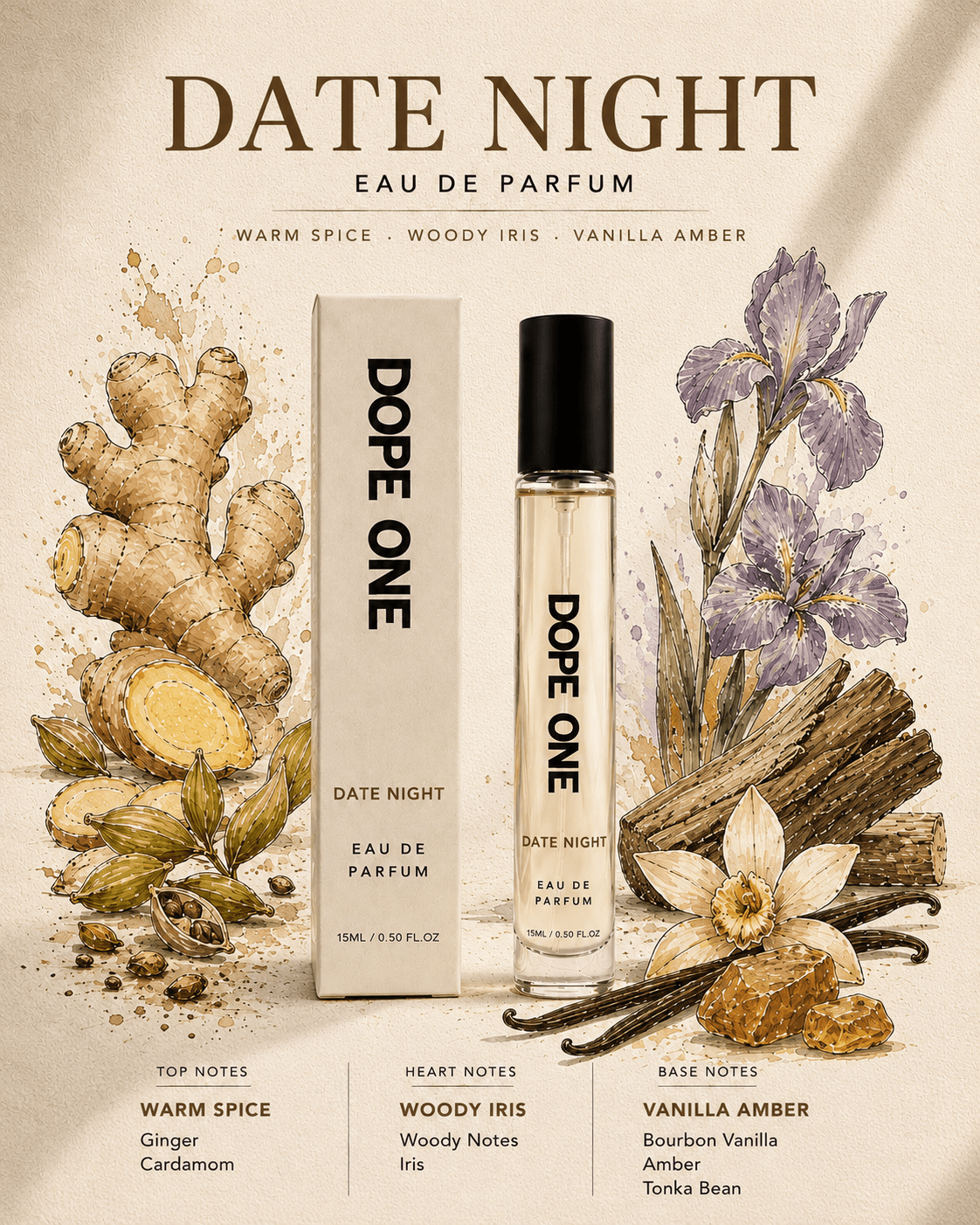
Date Night
Ginger, woody notes, bourbon vanilla. The closest architecture to a future tobacco SKU, not a tobacco fragrance itself.
₹419
View →
When tobacco does enter the line, it will probably enter as a variant of an existing SKU's architecture rather than a standalone tobacco soliflore. Tobacco-vanille-ginger is the most promising direction: ginger cuts the sweetness, tobacco provides the character, vanilla provides the warmth. The architecture already exists in Date Night. Tobacco would be a natural extension of that composition's logic. Amber, oud, and incense variants are all plausible. The Indian tobacco farmer grows the crop. The Indian perfume consumer buys the fragrance. The gap between them is where the next DOPE ONE SKU will eventually sit.
I caught myself smelling my own sleeve through the evening, mid-conversation, more than once. That's the entire review. Warmth makes it more inviting, not louder — and the later the evening runs, the better it gets.
Common Questions About Tobacco in Perfumery
Does tobacco perfume smell like cigarettes?
No. Cigarette smoke contains hundreds of combustion byproducts: tar, carbon monoxide, benzene, formaldehyde. Tobacco absolute is a solvent extract of cured, non-combusted leaf. It smells like honeyed hay, dried fruit, and warm leather. A tobacco fragrance and a pack of cigarettes share the same plant. They do not share a smell.
What is tobacco absolute?
Tobacco absolute is a solvent-extracted concentrate from cured tobacco leaves. It costs ₹25,000-50,000 per kilogram. The key aroma molecules are solanone (warm-spicy), damascenone (fruity-honeyed), and beta-damascenone (cooked apple, plum). Nicotine is present in trace amounts and has almost no smell at perfumery concentrations.
Is tobacco perfume wearable in Indian summer?
Pure tobacco absolute becomes cloying above 35°C. Tobacco compositions balanced by citrus, fresh spice, or green notes (tobacco-bergamot, tobacco-iris, tobacco-ginger) work year-round. Tobacco-vanilla and tobacco-oud are evening and winter territory. Monsoon is tobacco's best Indian season.
What is the best tobacco perfume?
Tom Ford Tobacco Vanille (2007) is the reference. Herod by Parfums de Marly is the most wearable year-round tobacco. Rasasi La Yuqawam Tobacco Blaze is the best budget tobacco. NEESH Tobacco Vanilla is the best Indian niche tobacco entry.
Does India produce tobacco for perfumery?
India is one of the world's largest tobacco producers (Gujarat, Andhra Pradesh, Karnataka), but virtually no Indian tobacco is processed for perfumery absolute. The trade is dominated by American, Italian, Greek, and Turkish leaf. The raw material exists. The supply chain for perfumery-grade processing does not.
The Note That Smells Like a Room, Not a Person
Tobacco in perfumery is the smell of things that take time: cured leaf, dried fruit, warm leather, the patina on an old wooden desk. It is not the smell of a habit. It is the smell of patience. India grows tobacco by the tonne, exports it by the shipload, and does not convert a leaf into absolute for its own perfumers. That will change. The raw material is too good, and the demand is too real. When it does, the note that has nothing to do with smoking will finally have everything to do with India.
Common questions
- Does tobacco perfume smell like cigarettes?
- No. Cigarette smoke contains combustion byproducts. Tobacco absolute is a solvent extract of cured, non-combusted leaf. It smells like honeyed hay, dried fruit, and warm leather. Same plant, completely different smell.
- What is tobacco absolute?
- A solvent-extracted concentrate from cured tobacco leaves. Costs ₹25,000-50,000/kg. Key molecules: solanone (warm-spicy), damascenone (fruity-honeyed), beta-damascenone (cooked apple/plum). Nicotine is present in trace amounts.
- Is tobacco perfume wearable in Indian summer?
- Pure tobacco absolute becomes cloying above 35°C. Tobacco balanced by citrus, spice, or green notes (bergamot, iris, ginger) works year-round. Tobacco-vanilla and tobacco-oud are evening/winter. Monsoon is tobacco's best Indian season.
- What is the best tobacco perfume?
- Tom Ford Tobacco Vanille (reference), Herod by Parfums de Marly (most wearable year-round), Rasasi La Yuqawam Tobacco Blaze (best budget), NEESH Tobacco Vanilla (best Indian niche entry).
- Does India produce tobacco for perfumery?
- India is a top-three global tobacco producer (Gujarat, Andhra Pradesh, Karnataka), but virtually no Indian tobacco is processed for perfumery absolute. The supply chain for perfumery-grade processing does not exist domestically.