Chocolate in Perfumery: The Note That Is Never Just Chocolate
Transparency: we formulate DOPE ONE Date Night. Every fragrance here, including ours, is judged on the same criteria: Indian heat performance, fabric longevity, and fidelity to the original's character. Where ours falls short, we say so.
Chocolate in perfumery is the most misleading note description in the palette. When a fragrance lists chocolate as a note, it does not mean the perfume contains anything that would pass for chocolate in a kitchen. It means the perfumer has selected a combination of molecules that together create the impression of chocolate. The accuracy of that impression depends on which molecules are chosen and in what proportion.
Cocoa absolute smells like dark chocolate: dry, bitter, powdery, slightly fruity, and unmistakably chocolate-like. Ethyl vanillin smells like milk chocolate: sweet, creamy, and vanillic. Pyrazines smell like the roasted, nutty edge of cocoa beans. Furaneol smells like the strawberry-chocolate bridge that makes chocolate feel complete. A perfumer who wants a dark chocolate note uses cocoa absolute at 1-3% and adds a trace of pyrazine for roast.
No DOPE ONE SKU contains chocolate. The closest architectural neighbour is Date Night, whose bourbon vanilla and ginger structure shares the same gourmand register as chocolate. But chocolate in Indian heat is a difficult note: it becomes heavy, cloying, and overwhelming above 35 degrees Celsius. The molecule that makes chocolate delicious to eat makes it challenging to wear in a subtropical climate.
What Chocolate Actually Is in Perfumery
Chocolate in perfumery is a combination of molecules that were originally identified in cocoa beans and are now reproduced synthetically to create the chocolate effect. The primary materials are:
| Material | Character | CAS / Source | Cost/kg | Typical Usage |
|---|---|---|---|---|
| Cocoa Absolute | Dark, bitter, powdery, slightly fruity. The most realistic chocolate material. Made by solvent extraction of roasted cocoa beans. | Natural extract | ₹70,000-1,25,000 | 0.5-3% of concentrate. Too much reads as burnt. |
| Ethyl Vanillin | Sweet, creamy, milk-chocolate character. Three times stronger than vanillin. The molecule that makes chocolate smell sweet. | CAS 121-32-4 | ₹800-1,500 | 0.1-0.5%. Overuse creates a synthetic, candy-like sweetness. |
| 2,5-Dimethylpyrazine | Roasted, nutty, cocoa-like. The molecule responsible for the roasted character of chocolate. | CAS 123-32-0 | ₹2,000-5,000 | 0.01-0.1%. Extremely potent. A trace adds roast. Too much smells like burnt popcorn. |
| Furaneol (Strawberry Furanone) | Sweet, caramelised, strawberry-chocolate. The molecule that bridges fruit and chocolate. | CAS 3658-77-3 | ₹5,000-10,000 | 0.05-0.2%. Adds sweetness and juiciness. Essential for the complete chocolate effect. |
| 5-Methylfurfural | Sweet, caramel, brown-sugar character. The molecule that adds the caramelised edge to chocolate accords. | CAS 620-02-0 | ₹1,500-3,000 | 0.05-0.2%. Adds baked sweetness, not chocolate character. |
Chocolate is not a single ingredient. It is a category of effect that the perfumer achieves through careful blending. The difference between a dark chocolate fragrance and a milk chocolate fragrance is the ratio of cocoa absolute to ethyl vanillin. The difference between a chocolate fragrance that works and one that smells like a cheap candy bar is the dose of pyrazines. Chocolate is the note that demands the most precise touch in the gourmand category, a family with its own roundup of picks worth reading alongside this one.
How Chocolate Entered Perfumery
Chocolate entered modern perfumery through the 1990s gourmand revolution. Thierry Mugler A*Men (1996) is widely credited as the first chocolate-forward designer fragrance, using cocoa absolute and ethyl vanillin to create a gourmand composition that redefined masculine perfumery. The chocolate note was controversial at launch and is now a staple of the gourmand category.
The 2010s saw the expansion of chocolate into feminine and unisex perfumery. Montale Chocolate Greedy (2013) established the sweet chocolate soliflore. By the 2020s, chocolate was being used as a supporting note in woody, floral, and oriental compositions rather than solely as the main character.
If Chocolate Is Too Heavy
| Alternative | What You Get | What You Lose |
|---|---|---|
| Tonka Bean Absolute | Sweet, warm, coumarin-rich. The closest warm-gourmand note that does not carry chocolate's weight. | No cocoa bitterness. Tonka is sweet and warm but has none of chocolate's dark, roasted edge. |
| Ethyl Maltol | Sweet, cotton-candy caramel. Provides the dessert-like sweetness of chocolate without the cocoa character. | No complexity. Ethyl maltol is one-dimensional sweetness. |
| Vanilla Absolute | Sweet, warm, dark, honeyed. The gourmand anchor that shares chocolate's comfort-food register. | No roasted edge. Vanilla is sweet where chocolate is bitter-sweet. |
| Coffee Absolute | Dark, roasted, bitter in a different register. The only note that shares chocolate's roasted complexity without being sweet. | Coffee is savoury where chocolate is dessert. Different category entirely. |
How Chocolate Behaves on Indian Skin
| Season | What Chocolate Does | Verdict |
|---|---|---|
| Summer (35-45°C) | Cocoa absolute's dark, bitter character becomes heavy and can read as rancid or burnt. Ethyl vanillin becomes cloying. Pyrazines amplify, creating an overwhelmingly roasted impression. | Difficult. Only wearable at very low concentrations or as a fleeting top note. Evening winter wear only in India. |
| Monsoon (80%+ RH) | The weight of chocolate is oppressive in monsoon humidity. The dense, fatty character clings to skin in an unpleasant way. | Avoid. The worst Indian season for chocolate. |
| Winter (5-20°C) | Full chocolate performance. Cocoa absolute's richness is where it belongs. Ethyl vanillin's sweetness is comfortable. Pyrazines add a cosy, roasted warmth. | Excellent. Chocolate's natural season in India. |
The Indian rule for chocolate: winter only. Chocolate is one of the few notes that has almost no place in the Indian summer. The heavy, fatty, cocoa-butter character that makes chocolate delicious to eat becomes suffocating to wear above 30 degrees Celsius. If you must wear chocolate in summer, apply a trace amount and pair it with a strong citrus or green top note.
Who Chocolate Is For
Chocolate attracts the wearer who wants to smell edible. It is the note for someone who has decided that fragrance should be comforting rather than impressive. Chocolate wearers tend to be nostalgic, generous, and uninterested in the rules of what fragrance should smell like.
| Who It Is For | Why It Works |
|---|---|
| Winter evening wearers | Chocolate is the ideal cold-weather note. It wraps the wearer in warmth that no other note can match. |
| Wearers who love gourmands | Chocolate is the deepest, most complex gourmand note. It is the foundation of the category. |
| Wearers who want to be noticed | Chocolate is impossible to ignore. It is the most recognisable note in the palette. |
| Who It Is Not For | Why It Fails |
|---|---|
| Indian summer wearers | Chocolate in Indian summer is oppressive. The heavy, fatty character becomes overwhelming above 30°C. |
| Wearers who dislike sweet notes | Even dark chocolate has a natural sweetness from ethyl vanillin and furaneol. Chocolate is inherently sweet. |
| Professional and formal settings | Chocolate reads as dessert, not sophistication. In a professional setting, it can be perceived as informal or juvenile. |
What Chocolate Plays Well With
Chocolate pairs best with other warm, sweet notes that share its gourmand register. The key is to choose companions that complement its depth without amplifying its weight.
Chocolate and vanilla is the most natural pairing. Vanilla softens cocoa absolute's bitter edge and extends the sweet impression. The combination is the foundation of most edible gourmands. Our vanilla guide covers the gourmand anchor.
Chocolate and coffee is the dark-roasted pairing. Coffee's roasted bitterness matches cocoa absolute's character. The combination is sophisticated, adult, and complex, and coffee is one of the few gourmand materials that holds up in Indian heat.
Chocolate and patchouli is the earthy-gourmand classic. Patchouli's dark, woody character grounds chocolate's sweetness, and it turns up in far more compositions than its label ever admits.
What Does Not Work With Chocolate
Chocolate and strong aquatic notes (Calone, high-dose Ultrazur) clash aggressively. The heavy cocoa absolute fights with the watery freshness, creating a jarring discord. Chocolate and high-dose citrus without a bridge note (like a creamy floral) can read as medicinal.
Five Chocolate Fragrances Worth Wearing
| Fragrance | Chocolate Character | Price Band (India) | Heat Performance | Best For |
|---|---|---|---|---|
| Thierry Mugler A*Men | Cocoa absolute + patchouli + tarragon. The reference chocolate fragrance. Dark, bitter, complex, genre-defining. | ₹5,000-7,000 | Winter only. Heavy and oppressive in Indian summer. | Understanding the original chocolate fragrance. The historical reference. |
| Montale Chocolate Greedy | Cocoa absolute + vanilla + orange. The sweet chocolate soliflore. Dessert-like, comforting. | ₹8,000-10,000 | Winter evening only. Too sweet for any heat. | Understanding chocolate as a main character. The sweet chocolate reference. |
| Amouage Interlude Man | Cocoa absolute + incense + oregano + leather. The reference dark/bitter chocolate in a complex composition. Not immediately recognisable as chocolate. | ₹18,000-22,000 | Incense and leather base handles heat better than most chocolate fragrances. | Understanding chocolate as a structural note rather than the main character. |
| Purvae Amour Cacao | Cocoa absolute + vanilla + musk. An Indian indie gourmand. Accessible, affordable, and sweet. | ₹999 | Winter only. Sweet gourmands struggle in Indian heat. | Understanding the Indian indie chocolate option. Affordable entry point. |
| DOPE ONE Date Night | Ginger + woody notes + bourbon vanilla. The closest architecture to chocolate in the line, but chocolate-free. A gourmand that works in Indian heat. | ₹419 / ₹1,319 | Designed to handle heat. Ginger and bourbon vanilla are both summer-gourmand notes that chocolate cannot match. | Understanding a heat-tolerant gourmand alternative. |
Regulatory Considerations
Cocoa absolute and individual chocolate molecules have no significant IFRA restrictions. The only caution is that cocoa absolute can stain clothing at higher concentrations (above 3% of the concentrate) and can cause skin sensitisation in rare cases. At typical usage levels (0.5-2%), it is safe.
Date Night: The Gourmand That Chocolate Could Be
Date Night is not a chocolate fragrance. It is a ginger-bourbon vanilla gourmand that shares the same edible warmth as chocolate without any of its heat limitations. The comparison is instructive because it illustrates the trade-off that chocolate perfumers face: cocoa absolute is the most satisfying gourmand material in cold weather and the most oppressive gourmand material in Indian summer.
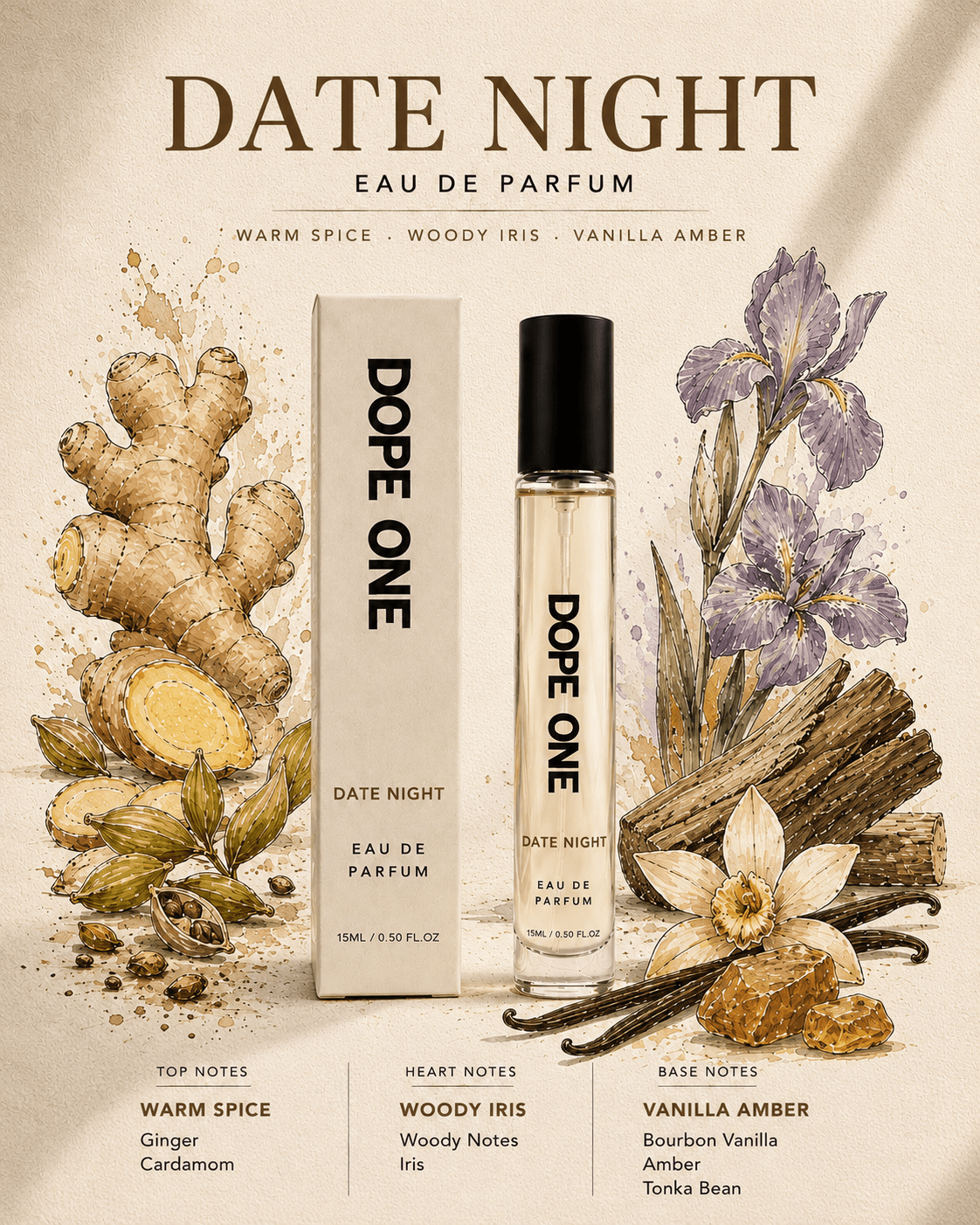
Date Night
Ginger, woody notes, bourbon vanilla. A gourmand that works in heat.
₹419
View →
Date Night solves the chocolate problem by choosing a different molecule architecture. Ginger provides the spicy warmth that chocolate would provide in winter. Bourbon vanilla provides the sweet comfort that chocolate would provide. The result is a gourmand that performs year-round in India. If chocolate ever enters the DOPE ONE palette, it will likely be as a limited winter extrait. Until then, Date Night is the gourmand that knows its climate.
I caught myself smelling my own sleeve through the evening, mid-conversation, more than once. That's the entire review. Warmth makes it more inviting, not louder — and the later the evening runs, the better it gets.
Date Night is ₹419. It is not chocolate. It is what chocolate could be if chocolate could handle a Delhi evening in July.
Common Questions About Chocolate in Perfumery
Is chocolate in perfume real chocolate?
Rarely. Most chocolate perfumes use cocoa absolute (dark, bitter, natural extract, ₹70,000-1,25,000/kg) or a blend of ethyl vanillin, pyrazines, and furaneol to create the chocolate effect. Real chocolate cannot be used in perfume because its fatty cocoa butter would clog atomisers and spoil rapidly.
What is the difference between milk chocolate and dark chocolate in perfume?
Dark chocolate uses cocoa absolute dominant (dark, bitter, powdery). Milk chocolate uses ethyl vanillin dominant (sweet, creamy, light). The ratio of cocoa absolute to ethyl vanillin determines the chocolate type.
Is chocolate perfume wearable in Indian summer?
No. Chocolate is one of the most difficult notes to wear in Indian summer. It becomes heavy, cloying, and overwhelming above 30 degrees Celsius. Chocolate is strictly winter evening wear in India.
What is the best chocolate perfume?
Thierry Mugler A*Men (original reference, dark chocolate), Montale Chocolate Greedy (sweet chocolate soliflore), Amouage Interlude (structural chocolate), Purvae Amour Cacao (Indian indie option), DOPE ONE Date Night (heat-tolerant gourmand alternative).
Does India produce cocoa for perfumery?
India produces 25,000-30,000 tonnes of cocoa annually, mostly in Kerala, Karnataka, and Andhra Pradesh. The crop is used for chocolate manufacturing. No Indian cocoa is processed for perfumery-grade absolute. The gap is the same as Indian tea, vanilla, and coconut: the value-added chemistry happens elsewhere.
The Hardest Note in the Palette
Chocolate is the most delicious, most difficult note in perfumery. It is the note that requires the most precision, the most expensive materials, and the most self-awareness about climate. India's cocoa farmers in Kerala produce beans that are eaten, not worn. The molecule does not care about its origin. It cares about the temperature of the skin it lands on.
Date Night is the gourmand that works in India. It is not chocolate and it does not pretend to be. If you want the real thing, wait for winter and reach for A*Men. The cocoa absolute will be worth the wait.
Common questions
- Is chocolate in perfume real chocolate?
- Rarely. Most use cocoa absolute (dark, bitter, ₹70,000-1,25,000/kg) or a blend of ethyl vanillin, pyrazines, and furaneol. Real chocolate's fatty cocoa butter would clog atomisers and spoil.
- What is the difference between milk and dark chocolate in perfume?
- Dark: cocoa absolute dominant (dark, bitter, powdery). Milk: ethyl vanillin dominant (sweet, creamy). The ratio determines the type.
- Is chocolate perfume wearable in Indian summer?
- No. Chocolate becomes heavy and cloying above 30°C. Strictly winter evening wear in India.
- What is the best chocolate perfume?
- Thierry Mugler A*Men (reference), Montale Chocolate Greedy (sweet), Amouage Interlude (structural), Purvae Amour Cacao (Indian indie), DOPE ONE Date Night (heat-tolerant gourmand alternative).
- Does India produce cocoa for perfumery?
- India produces 25,000-30,000 tonnes of cocoa annually (Kerala, Karnataka, Andhra). None is processed for perfumery-grade absolute. Same gap as tea, vanilla, and coconut.