Coffee in Perfumery: The Roasted Note That Works in Heat
Transparency: we formulate DOPE ONE Date Night. Every fragrance here, including ours, is judged on the same criteria: Indian heat performance, fabric longevity, and fidelity to the original's character. Where ours falls short, we say so.
Coffee in perfumery is the opposite of what most people expect. It is not the sweet, milky character of a café latte. It is the dry, roasted, bitter character of coffee beans subjected to heat. Coffee absolute and coffee CO2 extract are the primary natural materials, and they are surprisingly wearable in Indian heat because their profile is closer to roasted wood than to dessert. They do not become cloying the way chocolate, caramel, or vanilla can above 30 degrees Celsius.
India produces roughly 5% of the world's coffee, primarily in the Western Ghats. Karnataka accounts for 71% of Indian coffee production, followed by Kerala (15%) and Tamil Nadu (6%). Indian coffee is predominantly Arabica and Robusta, grown in shade under the forest canopy. The same terroir that produces award-winning coffee beans produces nothing for the fragrance industry. Coffee absolute is manufactured from beans sourced in Ethiopia, Colombia, and Brazil, not from the plantations of Chikkamagaluru.
What Coffee Actually Is in Perfumery
The smell of coffee is created by a combination of volatile sulphur compounds formed during the roasting process. The most important is 2-furfurylthiol (CAS 98-02-2), also known as furfuryl mercaptan, which is the primary molecule responsible for the characteristic coffee aroma. It is one of the most potent aroma compounds in perfumery, detectable at parts-per-billion levels. A single milligram of pure 2-furfurylthiol is enough to scent a litre of perfume.
Coffee absolute is produced by solvent extraction of roasted coffee beans. The yield is 4-10% of bean weight. Coffee CO2 extract uses supercritical carbon dioxide and produces a cleaner, fresher coffee character closer to the smell of freshly ground beans. The primary sulphur compounds in coffee are 2-methyl-3-furanthiol (meaty-roasted), methanethiol (eggy-roasted), and dimethyl trisulphide (onion-garlic at high concentration, coffee at low concentration). These molecules are responsible for coffee's complexity and its ability to read as savoury rather than sweet.
| Material | Character | Cost/kg | Typical Usage |
|---|---|---|---|
| Coffee Absolute | Dark, roasted, bitter, warm. The most realistic coffee material. Solvent-extracted from roasted beans. Closest to brewed coffee. | ₹90,000-1,50,000 | 0.5-3%. Too much reads as burnt. |
| Coffee CO2 Extract | Fresher, brighter, cleaner than absolute. Captures the top note of freshly ground coffee. | ₹8,000-15,000 | 0.5-2%. More transparent than absolute. |
| 2-Furfurylthiol (Synthetic) | The primary coffee molecule. Roasted, fresh coffee at low dose; burnt rubber at high dose. | ₹30,000-50,000/kg (used at ppm) | 0.001-0.01%. Trace amounts only. |
| Coffee Accord (Firmenich/Givaudan Bases) | Blended recreations for commercial perfumery. Predictable, stable, affordable. | ₹3,000-8,000 | 1-5%. The workhorse option. |
Coffee is the note that smells like the morning. Not the morning at a desk, but the morning in a roastery: dark, active, alert. If chocolate is the dessert at the end of the day, coffee is the beginning.
How Coffee Entered Perfumery
Coffee entered fine perfumery through the early 2000s gourmand boom, but it took longer than chocolate and vanilla because coffee absolute was more difficult to work with. The sulphur compounds that give coffee its character also give it a tendency to smell burnt, rubbery, or stale if dosed incorrectly.
The first notable coffee fragrance was Thierry Mugler A*Men Pure Coffee (2008), a flanker of the original A*Men that replaced the chocolate-patchouli core with a coffee-vanilla accord. By the 2010s, coffee had entered mainstream perfumery with fragrances like Montale Ristretto Intense Café, Kilian Black Phantom, and Hallucinogen by Liquides Imaginaires.
If Coffee Is Too Intense
| Alternative | What You Get | What You Lose |
|---|---|---|
| Birch Tar | Smoky, leathery, dark. The closest smoky-register alternative. Quite Boss carries birch in its heart, which sits in the same smoky register without being a roast note. | No gourmand character. Birch tar is leather-smoke, not drinkable warmth. |
| Cocoa Absolute | Dark, bitter, warm. Shares coffee's bitter-dark register without the sulphur edge. | No roasted character. Cocoa is dessert where coffee is stimulant. |
| Tobacco Absolute | Dark, hay-like, slightly sweet. The warm gourmand anchor for wearers who want depth without sweetness. | No caffeine-like sharpness. Tobacco is slow where coffee is alert. |
| Patchouli (Dark Fraction) | Earthy, dark, woody. The structural backbone that supports coffee accords. | No roasted character at all. |
How Coffee Behaves on Indian Skin
| Season | What Coffee Does | Verdict |
|---|---|---|
| Summer (35-45°C) | Coffee absolute's dry, bitter character handles heat surprisingly well. Unlike chocolate, coffee does not become cloying. The roasted profile can even be refreshing when paired with a fresh top note. | Good. One of the best gourmand notes for Indian summer. |
| Monsoon (80%+ RH) | Humidity softens coffee's sharp edges. The roasted character becomes rounder and more comfortable. | Good. Comfortable in monsoon. |
| Winter (5-20°C) | Full coffee performance. The warm, roasted character is at its most complete. A coffee fragrance in winter is the olfactory equivalent of a hot cup on a cold morning. | Excellent. Coffee's natural season. |
The Indian rule for coffee: it is the gourmand note you can wear year-round, and worth weighing against the rest of that family. Chocolate dies in summer. Caramel becomes sticky. Vanilla fades. Coffee stays present, dry, and wearable. The key is dosing: coffee absolute at 0.5-1% of the concentrate gives a pleasant roasted warmth. Above 2%, it reads as burnt and can be offensive.
Who Coffee Is For
Coffee attracts the wearer who wants to smell awake. It is the note for someone who has figured out that the best fragrance for the morning is the one that smells like the morning. Coffee wearers tend to be active, direct, and unromantic about their fragrance choices.
| Who It Is For | Why It Works |
|---|---|
| Year-round gourmand wearers | Coffee is the only gourmand that performs well in every Indian season. Its dry bitterness does not become cloying. |
| Morning and daytime wear | Coffee reads as alert and energising. The perfect note for daytime wear. |
| Wearers who dislike sweet notes | Coffee is the least sweet gourmand. It is bitter, roasted, and savoury. If you avoid vanilla and caramel, coffee is the gourmand for you. |
| Who It Is Not For | Why It Fails |
|---|---|
| Wearers who dislike bitter notes | Coffee is fundamentally bitter. The roasted, dark character is not sweet. If you avoid bitterness in fragrance, coffee is not for you. |
| Wearers who want projection | Coffee sits close to the skin. It does not project aggressively. The wearer experiences it more than the room. |
| Wearers who associate coffee with cafes | If the smell of coffee makes you want to order a latte, the perfume version will always feel like a marketing gimmick rather than a genuine fragrance. |
What Coffee Plays Well With
Coffee pairs best with other dark, warm notes that share its roasted register. The key is to choose companions that complement its bitterness without amplifying its weight.
Coffee and vanilla is the café pairing. Vanilla softens coffee's bitter edge and adds the sweetness that balances the roast. The combination is the foundation of most coffee gourmands. Our vanilla guide covers the gourmand anchor.
Coffee and tobacco is the dark-roasted pairing. Both share a hay-like, smoky character. The combination is sophisticated and adult. Our tobacco guide covers it further.
Coffee and bourbon vanilla is the date-night pairing. The ginger-vanilla base of Date Night would welcome coffee as a darker, more intense extension of its gourmand character.
What Does Not Work With Coffee
Coffee and strong fruity notes (berry, tropical) clash. The bitter-roasted character fights with fruity sweetness. Coffee and high-dose marine notes (Calone) create a muddy, discordant accord.
Five Coffee Fragrances Worth Wearing
| Fragrance | Coffee Character | Price Band (India) | Heat Performance | Best For |
|---|---|---|---|---|
| Kilian Black Phantom | Coffee + rum + sugar + amber. The reference luxury coffee gourmand. Dark, sweet, intoxicating. | ₹18,000-22,000 | Sugar and rum can be heavy in heat. Winter evening wear. | Understanding luxury coffee. The reference. |
| Montale Ristretto Intense Café | Coffee + rose + patchouli. The sweetest coffee on this list. Like an espresso shot with rose syrup. | ₹16,000-19,000 | Rose and sweetness can be cloying in heat. Evening wear. | Understanding coffee-floral. The sweet coffee option. |
| Mancera Aoud Café | Coffee + oud + vanilla. The dark-roasted coffee with a smoky oud backbone. | ₹7,500-8,500 (120ml) | Oud base handles heat. Coffee absolute is comfortable in Indian summer. | Understanding coffee in a Middle Eastern context. |
| SOSA Coffee Crush | Coffee + caramel + milk. An Indian indie coffee gourmand. Accessible, affordable. | ₹1,200-1,800 | Caramel can heavy in heat. Best for evening and winter. | Understanding the Indian indie coffee option. Budget entry. |
| DOPE ONE Date Night | Ginger + bourbon vanilla. Coffee is not present, but the gourmand architecture would welcome it. The most coffee-friendly base in the line. | ₹419 / ₹1,319 | Ginger and bourbon vanilla handle heat. Coffee is a missing note that would complete the composition. | Understanding coffee as a potential future addition to the gourmand line. |
Regulatory Considerations
Coffee absolute has no significant IFRA restrictions. The only caution is that the sulphur compounds in coffee can cause skin sensitisation in very rare cases. At typical usage levels (0.5-2% of the concentrate), it is safe. 2-Furfurylthiol is classified as a hazardous substance in pure form but is used at such extreme dilutions (parts per million) that it poses no risk in the finished product.
Where the DOPE ONE line sits next to coffee, without carrying it
Coffee is not a note in any DOPE ONE SKU. The closest architectural fit is Date Night, whose ginger-bourbon vanilla base provides the warm gourmand foundation that coffee would extend. If coffee ever enters the line, it would enter through this architecture: ginger providing the spicy lift, bourbon vanilla providing the sweetness, and coffee absolute providing the dark, roasted depth that the composition currently lacks.
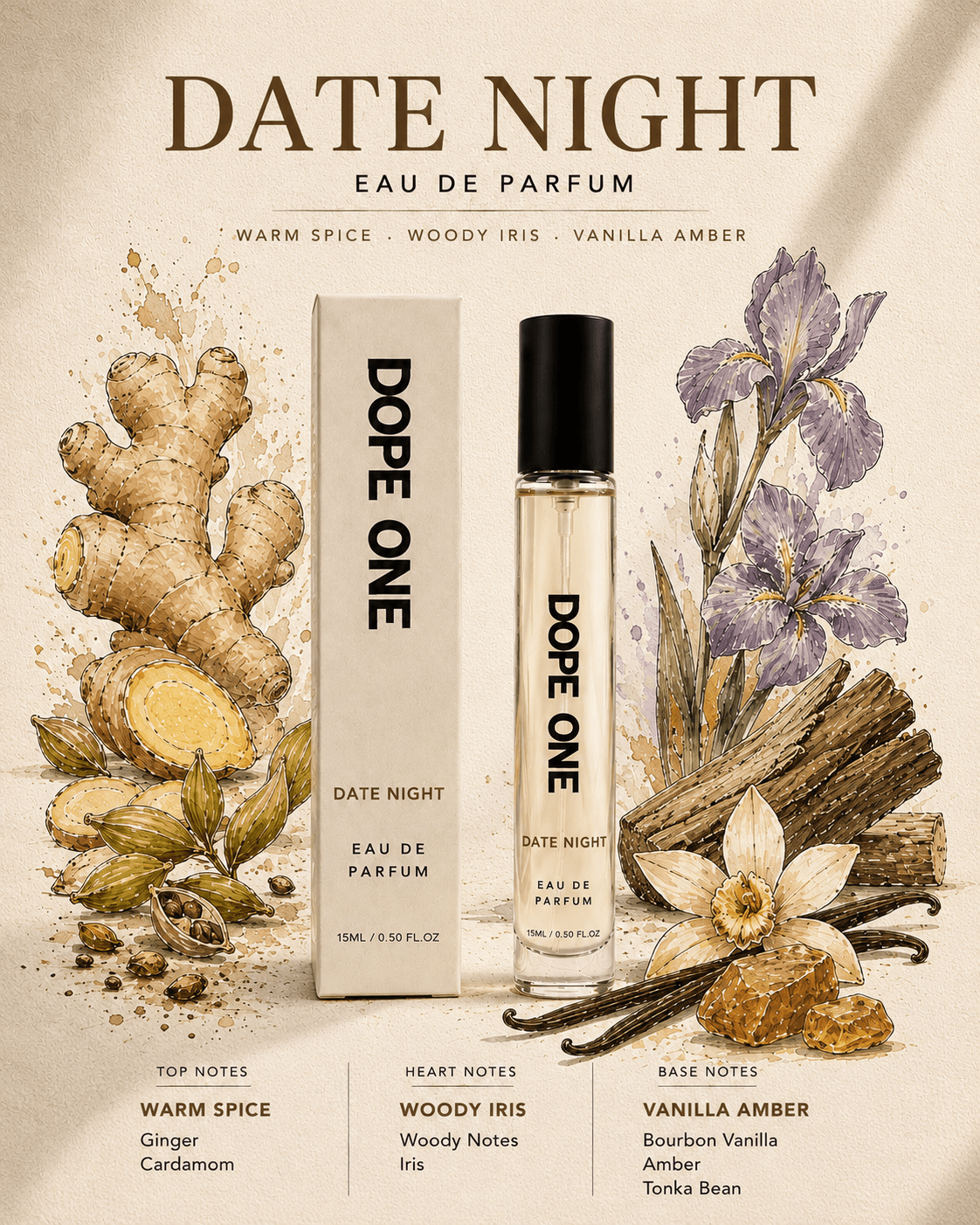
Date Night
Ginger, woody notes, bourbon vanilla. The architecture that coffee could complete.
₹419
View →
Date Night is a ginger-led gourmand that works in Indian heat. Coffee would be the natural extension to a darker, more intense flanker. Until then, the note remains aspirational. The coffee absolute costs ₹90,000-1,50,000/kg. Ginger, which is what Date Night actually opens on, costs ₹400-800/kg. The economics of heat-tolerant gourmands favour ginger for now.
I caught myself smelling my own sleeve through the evening, mid-conversation, more than once. That's the entire review. Warmth makes it more inviting, not louder — and the later the evening runs, the better it gets.
Date Night is ₹419. It is not a coffee fragrance. It is what coffee could be if coffee wanted to live in a Delhi summer.
Common Questions About Coffee in Perfumery
Is coffee in perfume real coffee?
Most coffee perfumes use coffee absolute (solvent-extracted from roasted beans, ₹90,000-1,50,000/kg) or coffee CO2 extract (cleaner, fresher, ₹8,000-15,000/kg). Real brewed coffee cannot be used in perfume because it contains water and oils that spoil and destabilise the formula.
What molecule makes coffee smell like coffee?
2-Furfurylthiol (CAS 98-02-2), also called furfuryl mercaptan. It is one of the most potent aroma compounds in perfumery, detectable at parts-per-billion. A single milligram can scent a litre of perfume.
Is coffee perfume wearable in Indian summer?
Yes. Coffee is one of the best gourmand notes for Indian summer. Its dry, bitter character does not become cloying the way chocolate or caramel does. Keep the dose low (0.5-1% of concentrate) to avoid a burnt impression.
What is the best coffee perfume?
Kilian Black Phantom (luxury reference), Montale Ristretto Intense Café (sweet coffee), Mancera Aoud Café (coffee-oud), SOSA Coffee Crush (Indian indie), DOPE ONE Date Night (closest architectural neighbour in the line).
Does India produce coffee for perfumery?
India produces 5% of the world's coffee (Karnataka 71%, Kerala 15%, Tamil Nadu 6%). Indian coffee is grown under shade in the Western Ghats. None is processed for perfumery-grade absolute. Coffee absolute comes from Ethiopia, Colombia, and Brazil.
The Note That Wakes You Up
Coffee in perfumery is the most honest gourmand. It does not pretend to be dessert. It is bitter, roasted, and workmanlike in its character. India grows coffee in the shade of the Western Ghats but does not process it for fragrance. The molecule that makes coffee smell like coffee is detectable at parts-per-billion. A material that powerful deserves respect in the dosage.
Coffee is not in any DOPE ONE SKU. It might be one day. The bean grows in Karnataka. The ginger grows in Kerala. The perfumer waits in the middle.
Common questions
- Is coffee in perfume real coffee?
- Most use coffee absolute (solvent-extracted from roasted beans, ₹90,000-1,50,000/kg) or coffee CO2 extract (₹8,000-15,000/kg). Brewed coffee cannot be used because water and oils spoil the formula.
- What molecule makes coffee smell like coffee?
- 2-Furfurylthiol (CAS 98-02-2), furfuryl mercaptan. One of the most potent aroma compounds in perfumery. Detectable at parts-per-billion. 1mg scents a litre of perfume.
- Is coffee perfume wearable in Indian summer?
- Yes. Coffee is one of the best gourmand notes for Indian summer. Its dry bitterness does not become cloying. Keep dose at 0.5-1% to avoid burnt notes.
- What is the best coffee perfume?
- Kilian Black Phantom (luxury), Montale Ristretto Intense Café (sweet), Mancera Aoud Café (coffee-oud), SOSA Coffee Crush (Indian indie), DOPE ONE Date Night (closest neighbour).
- Does India produce coffee for perfumery?
- India produces 5% of the world's coffee (Karnataka 71%, Kerala 15%, Tamil Nadu 6%). None is processed for perfumery-grade absolute. Coffee absolute comes from Ethiopia, Colombia, and Brazil.