Ylang Ylang in Perfumery: The Queen of Perfumes Has Five Different Faces
Transparency: we formulate DOPE ONE DATE NIGHT. Every fragrance here, including ours, is judged on the same criteria: Indian heat performance, fabric longevity, and fidelity to the original's character. Where ours falls short, we say so.
Ylang ylang carries the nickname "Queen of Perfumes" and anchors one of the most famous fragrances ever made, Chanel No. 5, but the name on a bottle almost never tells you which of five genuinely different grades you're actually smelling.
What Ylang Ylang Actually Is and the Vibe It Carries
The Chemistry
Ylang ylang comes from the flowers of Cananga odorata, a tropical tree grown mainly across Madagascar, Comoros, and Mayotte. The flowers are fractionally distilled, meaning the distillation is stopped and restarted at different points to separate the oil into distinct grades: Extra, I, II, III, and Complete. Extra is the richest fraction, capturing the esters and linalool that give ylang ylang its fine-fragrance quality. Later fractions like II and III carry more of the heavier sesquiterpenes, producing a rougher, less refined profile suited to soap and body care rather than fine perfumery.
The full oil reads as sweet, heady, and tropical, often described as banana-custard with a rubbery, slightly medicinal edge. No unusual IFRA restriction applies beyond the standard labeling requirements common to floral naturals containing benzyl benzoate and benzyl salicylate.
The General Perception
Ylang ylang reads as lush, tropical, and unmistakably floral, carrying genuine old-world glamour through its association with Chanel No. 5. If ylang ylang were a moment, it would be standing under a flowering tree in humid evening air, sweetness thick enough to taste.
Where Ylang Ylang Comes From and How It Earned Its Place
Sourcing
Comoros and Madagascar dominate global supply, with Mayotte producing a smaller, often more prized output. The islands' genuinely tropical, humid climate is essential to the flower's oil development, which is part of why cultivation hasn't spread much beyond this specific Indian Ocean region.
IFRA Reality
No unusual restriction on ylang ylang oil as a natural beyond standard labeling requirements for benzyl benzoate and benzyl salicylate content, both potential sensitisers requiring disclosure above certain concentrations rather than a usage ban.
How It Found Its Place in Perfumery
Ylang ylang became central to the aldehydic floral genre through Chanel No. 5, where it sits in the heart alongside jasmine and rose. Guerlain's Samsara later built an entire tropical-oriental character around it. The "Queen of Perfumes" nickname reflects this historic prominence rather than any single defining composition.
Alternatives, If Ylang Ylang Isn't for You
| Alternative | What You Get | What You Lose | Best When... |
|---|---|---|---|
| Jasmine | A more indolic, less banana-custard floral depth | Ylang ylang's distinctive tropical sweetness and rubbery edge | You want floral intensity without the tropical, fruity facet |
| Neroli | A brighter, lighter, citrus-adjacent floral character | Ylang ylang's heavy, heady tropical weight entirely | You want floral freshness rather than tropical richness |
| Vanilla-amber compositions | The warm, sweet register ylang ylang shares without the floral body | The actual tropical flower character | You liked ylang ylang's warmth more than its "flower" side |
The Indian Perspective on Ylang Ylang
The Cultural Anchor
Ylang ylang has no meaningful commercial cultivation in India today. The flower needs a genuinely tropical, humid, Indian Ocean island climate similar to Madagascar and Comoros to develop its oil properly, and India has never built a comparable industry around it.
Traditional Use
That said, India's own tropical coastal belts, parts of Kerala, Tamil Nadu, and the Andaman Islands, share real climate similarities with the Indian Ocean islands that currently supply the world's ylang ylang. This is a genuinely plausible, if currently unrealised, future domestic crop rather than an existing one, an honest distinction worth making rather than overstating India's role in this particular note.
The Modern Indian Context
Indian niche perfumery uses ylang ylang the same way most of the world does, as an imported material valued for its tropical floral character, without any domestic sourcing story to draw on yet.
Who Loves Ylang Ylang, and Who Doesn't
Why People Love It
- The banana-custard tropical sweetness is genuinely distinctive among white florals
- Carries real historic prestige through Chanel No. 5 and Guerlain Samsara
- The grading system rewards curiosity, since Extra and lower grades genuinely smell different
- Performs as a rich, memorable heart note in warm-weather compositions
Why They Won't
- Lower grades (II, III) can smell rougher, soapier, or dated compared to fine-fragrance-grade Extra
- The tropical sweetness can feel heavy or cloying in very high humidity
- Most labels don't specify which grade was used, so buyers can't predict quality
- Limited geographic sourcing (mainly Comoros, Madagascar, Mayotte) means less variety than more widely-grown florals
The honest trade-off: ylang ylang rewards someone who wants a genuinely tropical, historically significant floral note, but the grading system means quality varies more between products than most other florals in this series.
Pairings, Clashes and Real Fragrance Picks
What Ylang Ylang Pairs With
Ylang ylang pairs naturally with jasmine, which deepens its floral heart, with bergamot, which lifts its heaviness with citrus brightness, and with vanilla and amber, which extend its warm, sweet character into the base. It clashes with very clean, transparent musks that can feel mismatched against its tropical density.
Our jasmine guide covers the white floral ylang ylang is most often blended with, and our amber guide covers the warm base that carries its tropical weight.
Real Fragrance Recommendations
| Fragrance | Ylang Ylang's Role | Price Band (India, approx.) | Heat Performance | Best For |
|---|---|---|---|---|
| Chanel No. 5 | The genre-defining aldehydic floral heart, ylang ylang alongside jasmine and rose | ~₹12,000-16,000/100ml | Classic structure holds up reasonably well through Indian heat | Anyone wanting ylang ylang in its most historically significant form |
| Guerlain Samsara | A tropical-oriental build with ylang ylang and sandalwood at its core | ~₹11,000-14,000/100ml | Rich and warm; better suited to cooler evenings in high humidity | Fans of a heavier, more oriental ylang ylang interpretation |
| Serge Lutens Sarrasins | An ylang-ylang-forward niche composition with heavy indolic florals | ~₹10,000-13,000/50ml | Dense and warm; a cooler-weather fragrance | Experienced niche wearers wanting ylang ylang at full intensity |
| Dolce & Gabbana Q | A modern, brighter ylang-ylang-forward mainstream composition | ~₹6,500-9,000/100ml | Lighter build wears well in Indian heat | A more accessible, everyday entry point into the note |
| DOPE ONE Date Night | No ylang ylang in the formula, but vanilla and amber in the base genuinely share its warm, sweet-floral register | ₹419 (15ml) / ₹1,319 (50ml) | Best suited to evenings and cooler months, not daytime heat | Anyone curious about ylang ylang-adjacent warmth without the tropical floral itself |
Where DOPE ONE Sits Closest to Ylang Ylang
No current DOPE ONE SKU contains ylang ylang. The closest available register is Date Night, whose base genuinely carries bourbon vanilla and amber, sharing the warm, sweet-floral territory ylang ylang occupies even though the flower itself isn't in the formula.
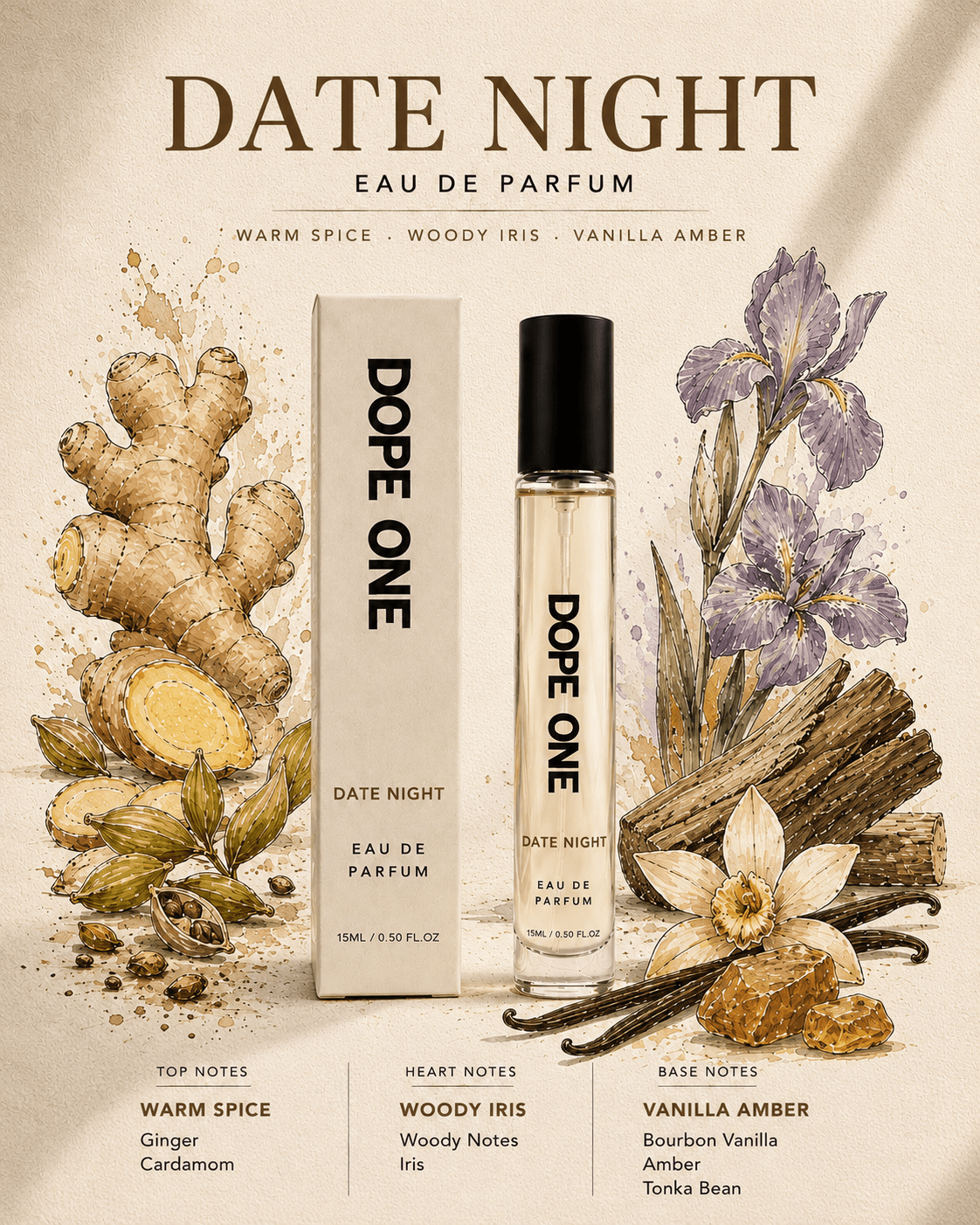
DATE NIGHT
Ginger and cardamom over woody notes and iris, resting on bourbon vanilla, amber, and tonka bean.
₹419
View →
I caught myself smelling my own sleeve through the evening, mid-conversation, more than once. That's the entire review. Warmth makes it more inviting, not louder — and the later the evening runs, the better it gets.
The honest limitation: it is not versatile and isn't trying to be. It knows exactly one mood, evening warmth, and doesn't need an actual date to want it, which is a different brief entirely from ylang ylang's tropical, daytime-capable floral character.
Ylang Ylang in Perfumery: Quick Answers
A few of the most common questions people ask about ylang ylang as a fragrance note, answered directly below.
The Bottom Line on Ylang Ylang
Ylang ylang is standing under a flowering tree in humid evening air, sweetness thick enough to taste, and the exact version of that experience depends entirely on which of its five grades made it into the bottle. Knowing that distinction explains more about whether a fragrance will feel refined or rough than the words "ylang ylang" on the label ever could.
Common questions
- What does ylang ylang smell like in perfume?
- Ylang ylang smells sweet, heady, and tropical, often described as banana-custard with a rubbery, slightly medicinal edge. The exact character depends heavily on which distillation grade was used.
- What are the grades of ylang ylang oil?
- Ylang ylang is fractionally distilled into five grades: Extra, I, II, III, and Complete. Extra captures the richest esters and linalool for fine fragrance use, while later fractions like II and III carry heavier, rougher sesquiterpenes suited to soap and body care.
- Is ylang ylang the same as jasmine?
- No. Both are heady white florals, but ylang ylang carries a distinctive tropical, banana-custard character that jasmine doesn't have, while jasmine leans more indolic and transparent.
- What perfumes use ylang ylang?
- Chanel No. 5 uses ylang ylang in its aldehydic floral heart alongside jasmine and rose. Guerlain Samsara builds an entire tropical-oriental character around it paired with sandalwood.
- Does ylang ylang grow in India?
- Not commercially today. Ylang ylang needs a genuinely tropical, humid climate similar to Madagascar, Comoros, and Mayotte, which currently supply nearly all of the world's oil. India's own tropical coastal regions share similar conditions but haven't developed a comparable industry.
- What pairs well with ylang ylang?
- Jasmine deepens its floral heart, bergamot lifts its heaviness with citrus brightness, and vanilla or amber extend its warmth into the base. It clashes with very clean, transparent musks.